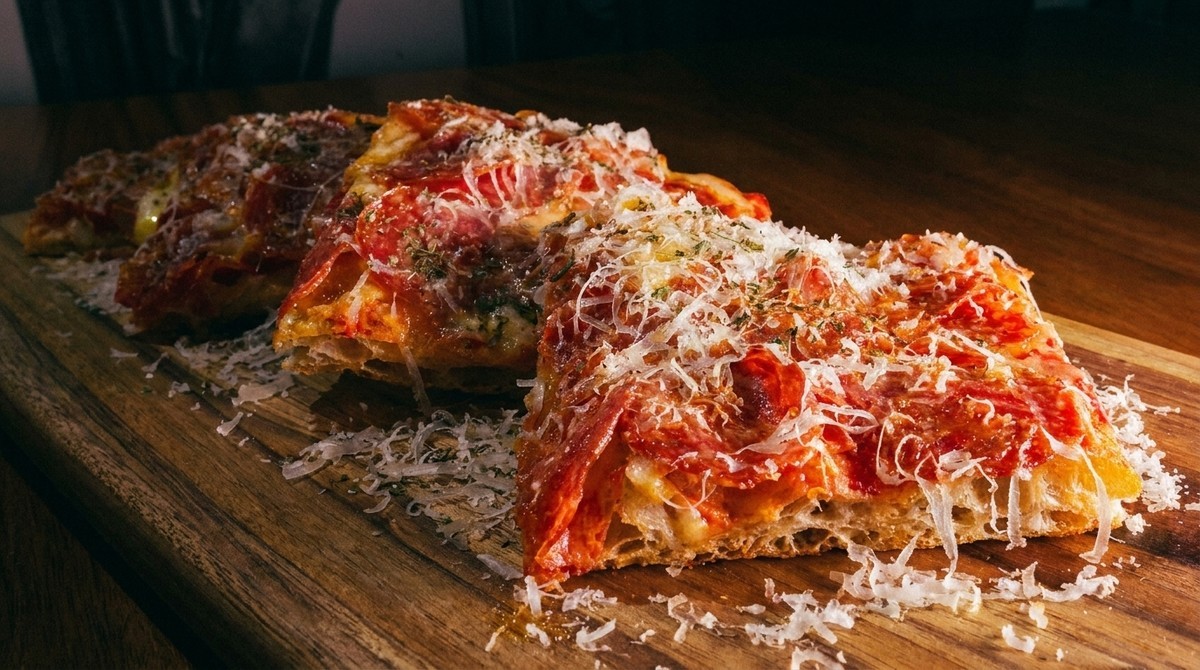
The last slice of pizza can be tomorrow's reward, but only if you store it well today. Knowing how long a properly refrigerated pizza lasts saves you from two very real tragedies: throwing out a spectacular pizza too soon, or risking a slice that's no longer safe to eat. The short answer is clear: 3 to 4 days in the fridge, as long as it got cold quickly and stays at 4 °C or below.
That window isn't an invitation to forget the box at the back of the fridge. Pizza brings together cheese, sauce, vegetables, meats and dough: delicious ingredients that need attention. And if it's a Roman pizza in teglia, with an airy, croccante base, storing and reheating it well also decides whether tomorrow's slice is still a real experience. Che buono.
How long does a properly refrigerated pizza last?
A baked pizza lasts 3 to 4 days in the refrigerator. That's the safe guideline for slices that went into the fridge within two hours of being served or delivered. If the room was very hot, as can happen on a tropical afternoon in Costa Rica, the limit drops to one hour when the temperature goes above roughly 32 °C.
Why does the clock matter so much? Because between 4 °C and 60 °C, bacteria can multiply fast. Putting the pizza in the fridge stops that rapid growth, but it can't work magic or reset the clock on its shelf life. A slice that sat on the table for four hours doesn't become safe just because you chill it afterward.
Day four is the sensible limit, even if the slice looks fine. Some microorganisms don't change the smell, taste or look of food right away. When you're unsure how long it sat out, the smartest decision is not to eat it. An incredible pizza deserves to be enjoyed, and it shouldn't turn into a bad idea.
The topping changes the quality, not the basic rule
The 3-to-4-day rule applies to pizza with cheese, pepperoni, ham, chicken, vegetables or similar combinations. Meats, dairy and some cooked vegetables can lose quality sooner, especially if the temperature moved around, but under no circumstances should they stretch the deadline.
Pizzas with fresh greens, burrata, creamy sauces or ingredients added after baking tend to lose their texture faster. In those cases, eating them the next day is your best move. They can still fall within the safe range if you refrigerated them properly, but the experience won't be the same: greens wilt, fresh cheese releases moisture and the dough loses some of its character.
How to store pizza in the fridge without ruining it
The cardboard box is for the trip home, and it isn't the best place for leftovers. Cardboard absorbs moisture, lets air in and can pick up smells from the fridge. If you'll eat the pizza the next day, the box can work for a short time if it's closed tight and the fridge holds a good temperature. To keep it in better shape until day three or four, move the slices to an airtight container.
Let the pizza release the worst of its steam for a few minutes, but don't wait hours for it to cool. The goal is to refrigerate it soon without sealing it in while it's still steaming, because the condensation will turn the base soft. Separating the slices with parchment paper keeps them from sticking, especially if there's plenty of cheese.
For a cleaner result, store the slices in a single layer in a shallow container. If you need to stack them, put parchment paper between each one. Close the lid tight and set the container in a cold, stable part of the fridge, away from the door. Every time you open the door, the temperature shifts, and that does your leftovers no favors.
Don't leave a whole pizza in an open box, don't just drape a napkin over it and don't put it next to strong-smelling foods. Cheese and dough soak up aromas easily. Your pizza should taste of tomato, mozzarella, olive oil and well-handled fermentation, and not of the chopped onion sitting next to it.
Fridge temperature matters more than you'd think
Your refrigerator should stay at 4 °C or below. Many home fridges run warmer than people assume, especially when they're packed, opened constantly or set too low. A simple thermometer can settle the question and protect a lot more than your pizza.
It's also a good idea to cut a large pizza into slices before refrigerating it. Smaller pieces cool faster and more evenly. That's no minor detail: cooling food quickly is one of the keys to keeping it within the safe range.
How to reheat it and bring back the croccante
The microwave heats fast, sure, but it tends to punish the base. For a Roman pizza, whose charm lies in the contrast between a croccante exterior and a light crumb, the oven or a skillet stays much truer to the product.
In the oven, preheat to 200–220 °C and place the slice directly on a hot tray or a rack for 5 to 8 minutes. Keep an eye on the cheese: you want it to melt again without drying out. If the slice is thick or has lots of toppings, cover it loosely for the first few minutes and uncover it at the end so the base firms up again.
In a skillet, use medium-low heat and cover for 3 or 4 minutes so the heat reaches the top. Then uncover for another minute or two. The base comes out golden and firm, an excellent fix when you don't want to turn on the oven.
The microwave is the last resort. If you have no other choice, heat in short 20- to 30-second bursts and finish the slice for a minute in a skillet. It won't match a pizza fresh from the oven, but it will spare you that rubbery texture nobody asked for.
Reheat only the amount you're going to eat. Refrigerating pizza again after you've heated it adds unnecessary temperature cycles and lowers both safety and quality. Take out one slice, enjoy it and keep the rest well chilled.
Signs you shouldn't eat it anymore
A sour smell, a sticky texture, visible mold or strange spots are reason enough to throw the pizza out. Don't always expect an obvious alarm, though. If it's been in the fridge more than four days, if you don't remember when you stored it or if it sat on the table too long, the sensible move is to say goodbye.
Don't try to rescue a slice by cutting off only the moldy edge, either. In moist foods, spores may have spread beyond what you can see. Reheating doesn't destroy all the toxins certain bacteria can produce. Heat improves cold pizza, but it can't fix poor storage.
Can you freeze pizza?
Yes, and it's a great option if you know you won't eat it in the next few days. Freeze the slices as soon as you can, ideally the same day or the next. Wrap them well to reduce freezer burn and store them in a freezer-safe container or bag.
Pizza keeps its best quality for one to two months in the freezer, though it can stay safe longer if it remains frozen the whole time. To reheat it, you can put it straight into the oven from frozen and add a few minutes to the usual time. That keeps the base in better shape than thawing it for hours.
Fresh pizza always has something you can't repeat: the aroma, the melted cheese, the dough right at its peak. At Bianka® Pizza Romana, that first croccante bite is part of the ritual. Still, a slice that was refrigerated well, reheated with patience and eaten in time can make the next day just as delicious. Store it well, heat it with intention and enjoy it without improvising on safety.