Aug 7, 2026
How to choose pizza al taglio and always get it right
The display case is full of golden slices, crispy edges, and toppings that catch your eye. But knowing how to choose pizza al taglio isn't just about pointing to the flavor that looks the most loaded. Great Roman pizza is recognized before the first bite: in the height of the dough, the bubbles in the crumb, the color of the base, and that toasted aroma that promises a bite that is crunchy, light, and full of character.
Pizza al taglio is sold by the slice or by weight, usually from a rectangular tray. This opens up a world of possibilities: you can try more than one combination, share a selection, or choose the perfect slice according to your craving. The key is to look with the eyes of a pizzaiolo, order with curiosity, and give priority to the dough. Because a spectacular topping cannot save a base without technique.
How to choose pizza al taglio: start with the dough
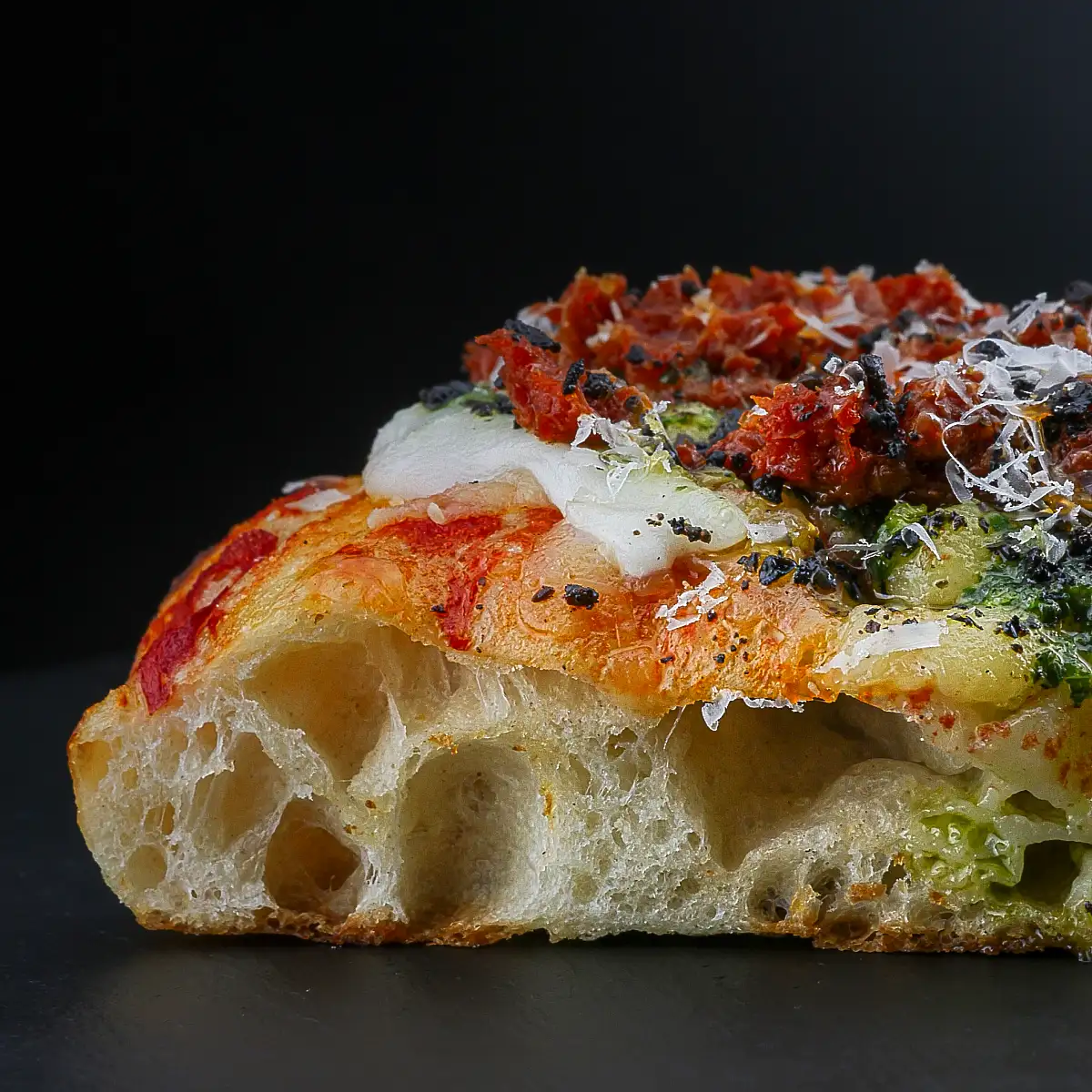
The dough is the heart of Roman pizza in teglia. A good slice should look airy, with irregular and visible alveoli when looking at the side cut. Those cavities are not an aesthetic detail: they speak of fermentation, hydration, and time. A well-crafted dough feels light even though it has presence, and offers a bite that combines a firm base with a soft interior.
Look for a golden surface, not pale. The color should come from an even bake, with slightly toasted areas that add flavor. The bottom deserves the same attention: it has to hold the topping without bending immediately or feeling hard like a cracker. Crispy does not mean dry. It means crunchy on the outside, alive on the inside.
In an approach that respects the times of Roman tradition, long fermentation makes a huge difference. A dough fermented for 72 hours develops depth of flavor, better texture, and a lightness that is appreciated after eating. It's not about filling the plate with bread, but about creating a base that makes every ingredient shine.
The sound also counts
Yes, listening can help. When the pizza comes out of the oven and is cut, a well-cooked base has a slight crack as it breaks. There's no need to turn lunch into a technical inspection, but that crunch is a delicious sign. If the cut looks shiny with grease, too soft in the middle, or has a pale base, it probably won't have that contrast that makes pizza al taglio memorable.
Choose according to the moment, not just the topping
There are days for an intense slice of spicy salami, others for roasted vegetables, melted cheese, or a fresh combination with seasonal ingredients. The useful question is not just "what looks delicious?", but "what do I want to feel right now?".
If you're having a quick lunch between meetings, a pizza with vegetables, tomato, and cheese can be a balanced and satisfying choice. If you're going out with friends, the best option is to order different slices and share. Pizza al taglio is made for that: comparing textures, alternating flavors, and finding an unexpected favorite.
For a night of serious cravings, the heavier toppings come in. Italian cured meats, cheeses with character, potatoes, cream, or combinations with a more intense sauce can be spectacular. Balance matters: if you choose a very loaded slice, pair it with a simpler one. That way the palate doesn't get tired and the experience remains interesting from start to finish.
Fewer ingredients can mean more pizza
A good margherita, a bianca with cheese, or a slice of potato and rosemary reveal much more about a pizzeria than a mountain of toppings. When the recipe is simple, there is nowhere to hide mistakes. You can taste the quality of the flour, the sauce, the olive oil, the cheese and, above all, the baking.
That doesn't mean creative pizzas are a bad choice. On the contrary: an unexpected combination can be the slice you remember most. The difference lies in each ingredient having a function. A topping should add aroma, texture, acidity, sweetness, or depth. If everything competes at the same time, the slice loses identity.
Look at the topping with Italian criteria
The cheese should look melted, not turned into a heavy, uniform layer. The tomato should retain color and freshness, not look like a lifeless, reheated sauce. The vegetables should look cooked but defined, with roasted edges and concentrated flavor. And if there are cold cuts, they should add fat, saltiness, and aroma without completely covering the work of the dough.
Also pay attention to the proportion. On Roman pizza, the topping accompanies the structure, it doesn't sink it. An excessively loaded slice might look good in a photo, but if it makes the dough wet and soggy, the result loses points. The best pizza al taglio can be held by hand, folded just a little if needed, and eaten without everything sliding off at the first bite.
Temperature matters. There are ingredients that shine fresh out of the oven and others that benefit from being added at the end. Fresh herbs, cured ham, arugula, or certain delicate cheeses shouldn't disappear under aggressive baking. That care shows that there is judgment behind the counter, not just speed.
Order more than one slice and build your own tasting
One of the greatest advantages of pizza al taglio is that it doesn't force the whole table to choose a single flavor. Two people can order four small slices, share them, and put together a tasting with real contrasts. Start with the most delicate flavors and finish with the most intense ones. It's a simple way to better appreciate each slice.
A smart combination could include a classic red pizza, a white one with cheese, a vegetarian one, and a more robust option with cold cuts or spice. There is no need to follow rigid rules. If the group loves cheese, order more cheese. If someone wants to try something new, add a different slice. The charm lies in breaking the routine of the usual round pizza.
At Bianka® Pizza Romana, this logic is enjoyed as it should be: square slices, long-fermentation dough, and a texture that celebrates the oven, rather than hiding it. It's pizza to choose, talk over, and order again.
Don't confuse pizza al taglio with reheated pizza
Pizza al taglio can be kept in a display case, but that shouldn't mean settling for a lukewarm, lifeless slice. Ask if they can heat it up before serving. A quick turn in the oven brings back crispiness to the base, reactivates the cheese aromas, and lets the topping express itself again.
Mind you: a good pizza must have quality even before being reheated. The oven can improve the temperature, but it won't correct a dense dough or poorly balanced ingredients. Observe the product, trust your senses, and don't be afraid to ask for a recommendation. Whoever knows their pizza knows how to guide you according to your hunger, your tastes, and the intensity you're looking for.
The best choice is the one that makes you want to repeat
There is no single answer to choosing pizza al taglio. It depends on whether you want something light or hearty, whether you're eating alone or sharing, whether you're looking for a classic or a flavor that takes you out of your comfort zone. But there are signs that never fail: airy dough, a crispy base, ingredients with identity, and a slice that feels balanced from the very first bite.
Next time you find yourself in front of a Roman pizza display case, stop for a second. Look at the crumb, choose by contrast, and order that slice that sparks your curiosity. Che buono starts like this: with a small decision and an extraordinary slice.