Aug 17, 2026
How to enjoy pizza bianca like in Rome
Pizza bianca doesn't ask for permission to stand out. It arrives golden, crispy, smelling of freshly baked dough and olive oil, without the layer of tomato sauce that usually grabs all the attention. Knowing how to enjoy pizza bianca means understanding that here, the protagonist is not hidden: it is the dough, its fermentation, its air, that contrast between a croccante base and a light interior that makes one slice never be enough.
In Rome, pizza bianca is a bakery institution. It is eaten on the go, sliced open to be filled, shared at a long table, or enjoyed on its own, still warm. It is not a pizza "without ingredients." It is a pizza with criteria.
What makes pizza bianca special
Traditional pizza bianca starts from a simple idea: high-hydration dough, olive oil, salt, and oven. It seems like little, but it demands a lot. When the fermentation is slow and the baking is well-executed, the dough develops flavor, aroma, and a texture that doesn't need to disguise itself.
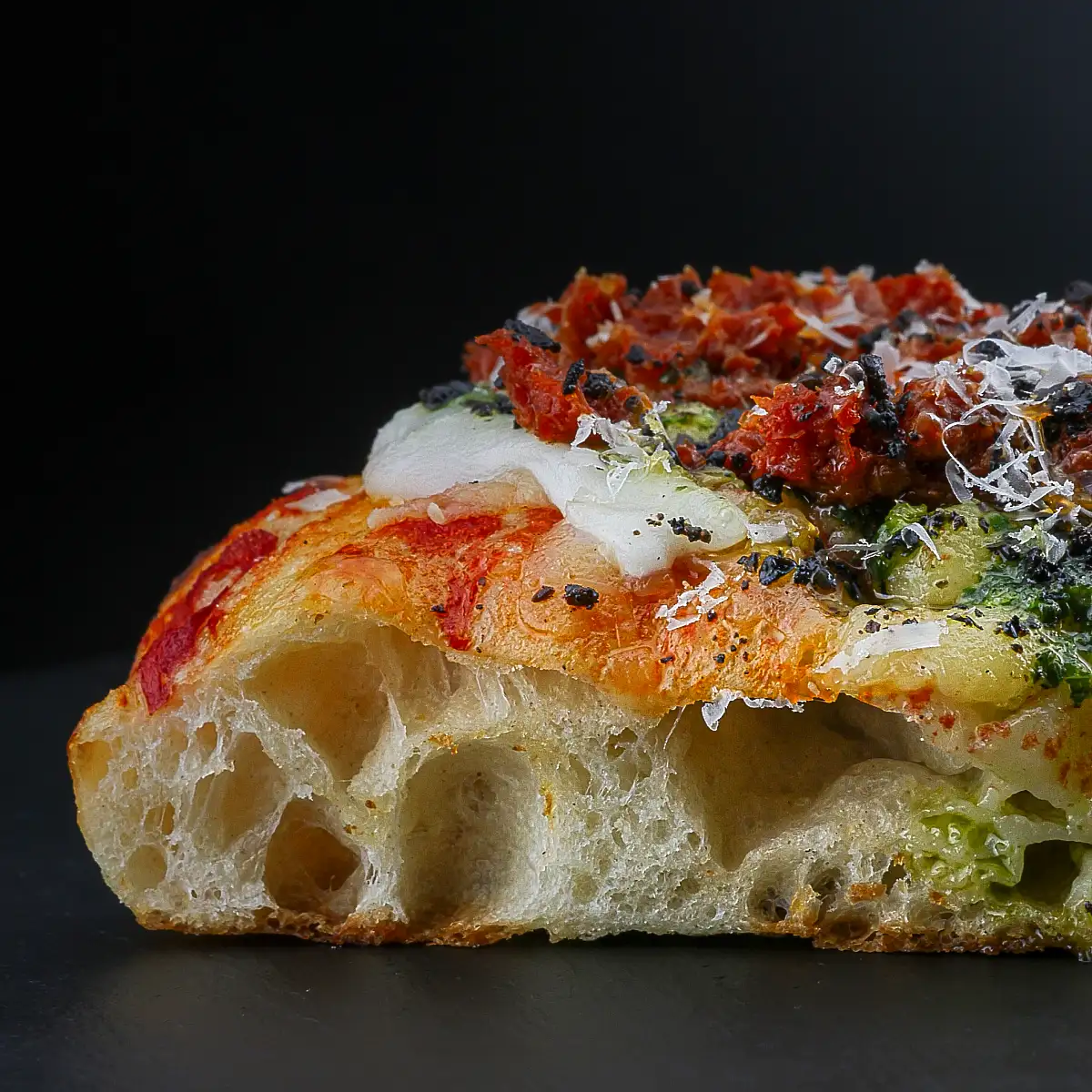
Its surface must have character: irregular bubbles, golden spots, and a crust that breaks delicately when bitten. Inside, it must retain a light, open, and moist crumb to just the right degree. That is the difference between a base that merely accompanies and one that turns every bite into an experience.
The most common confusion is thinking that pizza bianca means pizza with white sauce. Not necessarily. In the Roman tradition, "bianca" refers, above all, to the absence of tomato. It can have olive oil, cheeses, vegetables, cured meats, or fillings, but the profile of the dough still rules.
How to enjoy pizza bianca from the very first bite
You don't need to be an expert to eat it well, but it is worth giving it a few seconds of attention. Start by looking at it: a Roman-style pizza in teglia is recognized by its rectangular shape, its alveoli, and its golden base. Next, bring it close. The aroma of fermented flour, oil, and oven says a lot before you even taste it.
The first bite works best when the pizza is fresh out of the oven or just warm. Too hot can hide flavors; too cold can take away the expression of the crust. The ideal point lets you feel the crispiness without burning your palate and allows you to distinguish each ingredient.
Eat it with your hands, without unnecessary ceremony. The pizza al taglio was born to be practical, generous, and direct. If the slice is thick, hold it from the base so as not to squash the crumb. If it comes filled, bite from one end first and let the cut reveal the layers. That moment is part of the ritual.
Start with a simple version
If it is your first time, choose a pizza bianca with few ingredients. Olive oil, salt, rosemary, or a well-chosen cheese allow you to recognize the quality of the dough. When there are too many toppings, the flavor can be powerful, but the detail that makes a good Roman pizza memorable is also lost.
Afterwards, yes, move on to combinations with more contrast. Mortadella and pistachio, for example, play with richness, aroma, and a toasted touch. Prosciutto and arugula add saltiness and freshness. Roasted vegetables bring sweetness and depth. The key is for the filling to complement the bread, not to cover it up.
Pay attention to the texture
Pizza bianca is enjoyed as much with your hearing as with your taste. That little crack when breaking the base is a good sign. Then comes the crumb, which should feel light and springy, never heavy or dry.
The texture changes depending on the moment. Freshly baked, the base is firmer and more fragrant. After a few minutes, the cheeses settle and the flavors integrate better. There is no single correct answer: if you love maximum crunch, eat it immediately; if you prefer to calmly appreciate the filling, wait a bit. Che buono in both cases.
Choose the pairing according to the filling
A well-made pizza bianca doesn't need a complicated drink, but a good accompaniment can elevate it. For versions with cured meats, intense cheeses, or pistachio, a fresh lager beer cleanses the palate between bites without competing with the dough. A wheat beer can also work if you are looking for a more aromatic feel.
If you prefer wine, think of dry white wines with acidity. They go especially well with mozzarella, ricotta, vegetables, lemon, or herbs. For deeper fillings, like mushrooms or cured meats, a young, light red wine accompanies without dominating. Avoid options that are too sweet or highly tannic: pizza bianca has delicate nuances and deserves space.
For a fresh lunch or an alcohol-free outing, sparkling water with lemon and ice is an excellent choice. The bubble refreshes, cuts through the richness of the cheeses, and lets the olive oil express itself better. Sometimes the best partner for an extraordinary dough is the simplest one.
Sharing it changes the experience
Roman pizza invites you to order variety. Instead of choosing a single combination for the whole table, try several slices and share. That way you can start with a classic bianca, continue with a filled option, and close with a bolder proposal. It is the best way to discover which profiles you like without turning the meal into too serious a decision.
It is also ideal for groups because the in teglia format allows trying more than one recipe without waiting for an individual pizza for each person. On an outing with friends, a date, or a business lunch, this pace makes the table feel more alive: the texture is discussed, the last slice is negotiated, and someone always ends up asking which one was the favorite.
Mind you, sharing doesn't mean letting the pizza get cold during an eternal conversation. Order in stages if the table is large or serve the slices as soon as they arrive. Pizza bianca rewards those who eat it at its best.
The mistake of treating it like a generic pizza
Adding sauces without tasting first, reheating them any old way, or choosing solely by the amount of cheese are common mistakes. An artisanal pizza bianca is not designed to depend on ketchup, mayonnaise, or excessive seasoning. Before adding anything, try it just as it comes out. If the dough is well-fermented and the balance of ingredients is thought out, it probably doesn't need anything else.
Nor is it advisable to store it in a closed container when it is still very hot. The steam softens the crust and takes away that crunchiness that defines the experience. If you have to take it away, let it breathe for a few minutes. And if there are leftovers, reheating it in an oven or pan is much better than using a microwave: the goal is to recover the golden base, not to make it soggy.
A Roman experience in San Pablo de Heredia
Trying pizza bianca is a way to break out of the predictable round pizza routine. At Bianka® Pizza Romana, the dough fermented for 72 hours, the in teglia format, and the obsession with the croccante bring that Italian baking tradition to a table that feels modern, generous, and distinct.
It is not about ordering "just another pizza." It is about choosing a slice that has an identity: dough with character, ingredients that add up, and a technique that is perceived from the very first break of the crust. Book an outing, gather your people, and order a variety. Pizza bianca is best understood when tried without haste, shared with enthusiasm, and letting the first bite speak for itself.