Aug 29, 2026
How to order Roman pizza and get it right on the very first bite
Roman pizza is not ordered on impulse, nor is it chosen just for the topping. If you are wondering how to order Roman pizza, the answer begins by understanding that you are looking at a different category: long-fermentation dough, an airy base, croccanti edges, and a texture that completely changes the experience. It is not your typical generic round pizza. It is Rome served in teglia, with character, technique, and plenty of flavor.
When a pizza is well made, ordering becomes part of the ritual. You choose based on hunger, company, and the desire to try combinations that truly do justice to the dough. Che buono.
How to order Roman pizza according to your plan
First, think about the occasion. Are you eating alone, sharing with someone, or arriving with a group that wants to try a bit of everything? Roman pizza in teglia usually comes in a rectangular or square format, designed to be cut, shared, and varied in flavors. That is one of its great virtues: you don't have to commit to a single combination when the table asks for more.
For a date night, ordering two varieties is usually a much more interesting move than repeating the same flavor. A classic option and a more intense proposal allow you to compare textures, ingredients, and contrasts. If the table is full of friends, it is best to build an order with variety: something comforting, something with personality, and an alternative that surprises from the very first cut.
Appetite also rules. Roman dough has a light and airy structure, but don't confuse light with insubstantial. A prolonged fermentation develops flavor and improves texture, while the ingredients add intensity. If you want a full meal, order generously. If the plan is to keep chatting, sharing, and snacking, choose more variety in moderate portions.
Start with the dough, not the ingredients
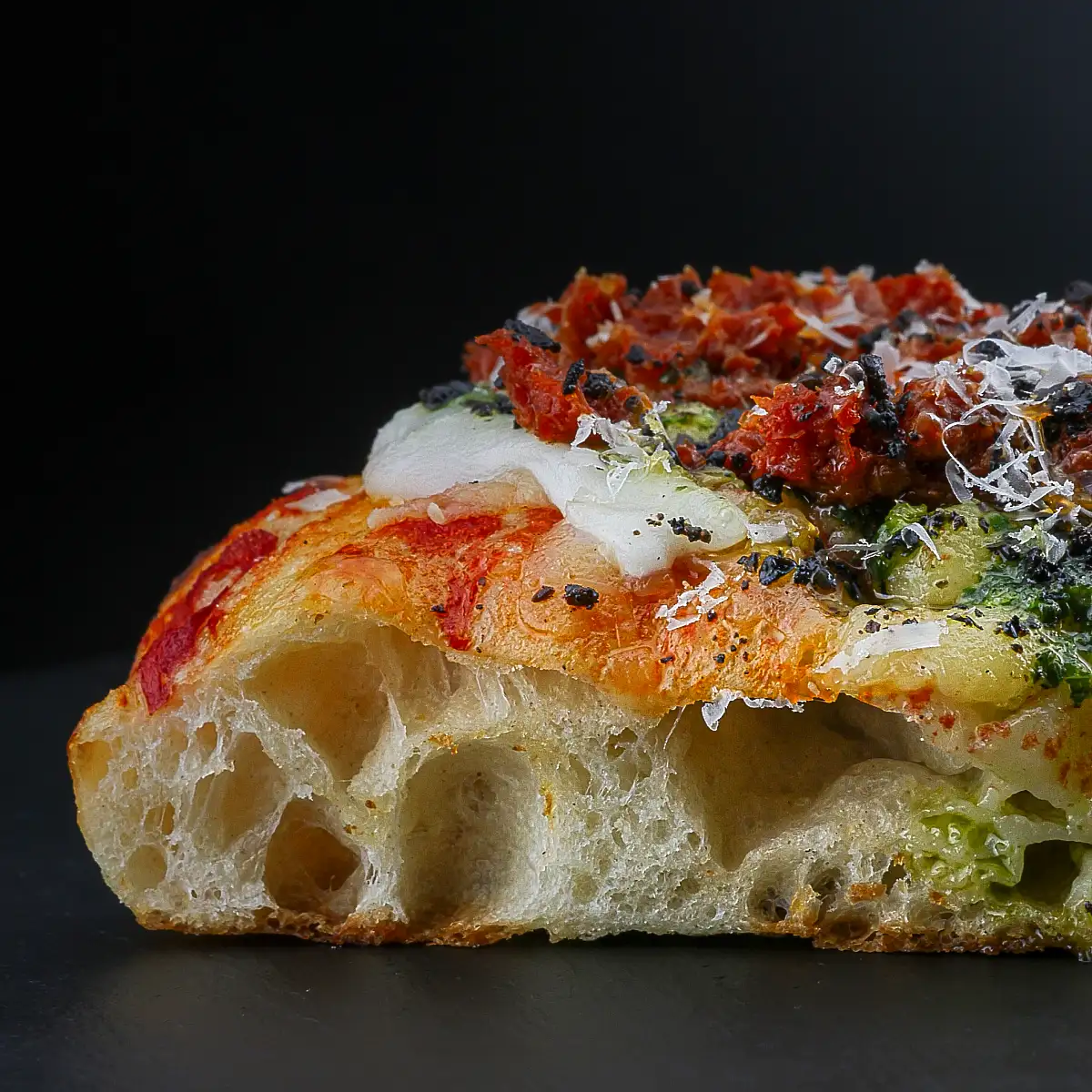
The most common mistake is reading a pizza menu as if everything depended on the cheese or the protein. On a real Roman pizza, the dough is the star. It has to make a sound when you bite into it, hold the ingredients without collapsing, and remain airy inside. That contrast between a crispy base and a light crumb is the reason this style has so many loyal followers.
The 72-hour fermentation is not just a pretty phrase for the menu. It is time dedicated to flavor. During this process, the dough gains depth, develops a particular texture, and reaches the oven ready to become a pizza with its own identity. That's why, when you order, choose flavors that allow you to appreciate that base instead of covering it up completely.
Simple combinations are a great entry point. Tomato, mozzarella, olive oil, herbs, or well-cooked vegetables can say a lot when the dough is up to par. More loaded options also have their moment, especially if you are looking for a hearty dinner, but it is worth leaving at least one slice where the technique speaks without too much noise.
Choose between the classic and the bold
If it's your first time, combine a recognizable recipe with another that goes out of the ordinary. This way you have a point of comparison and, in the process, discover why Roman pizza doesn't need to look like commercial pizza to win you over.
The classic works when you want clean, direct flavors. The bold works when you come with culinary curiosity and a desire to find ingredients, contrasts, or formats that don't appear in just any pizzeria. There is no single answer: it depends on whether your priority is nostalgia, discovery, or a bit of both.
Don't underestimate a well-thought-out vegetarian option. In this style, roasted vegetables, creams, cheeses, and herbs can have a spectacular presence because the dough offers a firm, toasted, and flavor-packed base. Ordering variety is not just a practical decision: it is the best way to explore the menu.
Don't confuse Roman pizza with round pizza
Roman pizza in teglia has its own rules. Its rectangular shape is not just a visual detail for the photo, although it does look incredible on the table. It responds to a bakery tradition and a cooking method that privileges a croccante base, a light interior, and the ease of cutting into portions.
This changes the way you order it and eat it. Instead of thinking of an individual pizza with eight identical slices, think of a selection of portions. You can try one combination, move on to another, and find out which one gets your vote. It is a social experience, especially good for casual dinners that deserve a less predictable product.
It also changes the expectation of the crust. Here you are not looking for a thick edge to leave on the plate. You are looking for a dough with great baking from end to end, with that crispy crackle that you hear before you feel it. Roman pizza has to arrive with presence, not with soggy dough or messy ingredients.
Add focaccia or schiacciata when you want to go further
There are days when a pizza in teglia is exactly what you want. And there are others when the craving calls for exploring the Italian baking tradition from another angle. That's where stuffed focaccia and schiacciata come in: formats with personality, ideal for those who value artisanal breads, generous fillings, and textures that cannot be found in a conventional option.
Stuffed focaccia feels more substantial and comforting. It is a great choice for lunches, for sharing, or for those who enjoy a more bread-like bite. Schiacciata, for its part, brings a different experience, with a crispier profile and a presence that turns a casual order into something memorable.
You don't have to order everything on the same visit. In fact, leaving a reason to return is part of the charm. One day you choose Roman pizza with friends; another, a stuffed focaccia for a more straightforward meal. The key is not to treat these products as identical substitutes. Each has its moment and its own way of shining.
Order to share, but do it wisely
Sharing doesn't mean ordering at random. If there are several people, think about flavor profiles and not just quantity. A well-organized table includes a friendly option for everyone, a recipe with more intensity, and a different alternative that starts a conversation. This avoids a flat order where everything tastes similar.
It is also wise to consider the group's preferences before confirming. If someone doesn't eat meat, if another person prefers less intense flavors, or if there are children at the table, a varied selection resolves the matter without sacrificing the experience. Roman pizza lends itself to this better than many others: the portions allow you to try and choose without drama.
For takeout, the logic is similar, with one important difference: eat it as soon as possible. The croccante is at its best freshly made. If you need to wait, keep it on a surface that doesn't trap moisture and avoid stacking the slices. A hot oven can help recover texture; the microwave, on the other hand, usually ruins exactly what makes this dough special.
The experience starts before the first bite
Ordering well also implies knowing what you want to experience. If you are looking for a quality dinner, an outing that feels different, or simply the satisfaction of a dough crafted with patience, choose a place that treats Roman pizza as a specialty and not as a passing trend. In San Pablo de Heredia, Bianka® Pizza Romana brings that spirit to the table with pizza in teglia, focaccia, and schiacciata made for those who expect more than melted cheese on dough.
Make a reservation if the plan deserves sitting down without rushing. Order takeout if you want to turn an ordinary night into a night with croccante. And when you have the pizza in front of you, don't rush to cover it with sauces: try it first just as it comes out. A good Roman pizza introduces itself, with a bakery aroma, a crispy base, and the kind of bite that makes the next choice much easier.