Jul 18, 2026
How pizza al taglio is served just like in Rome
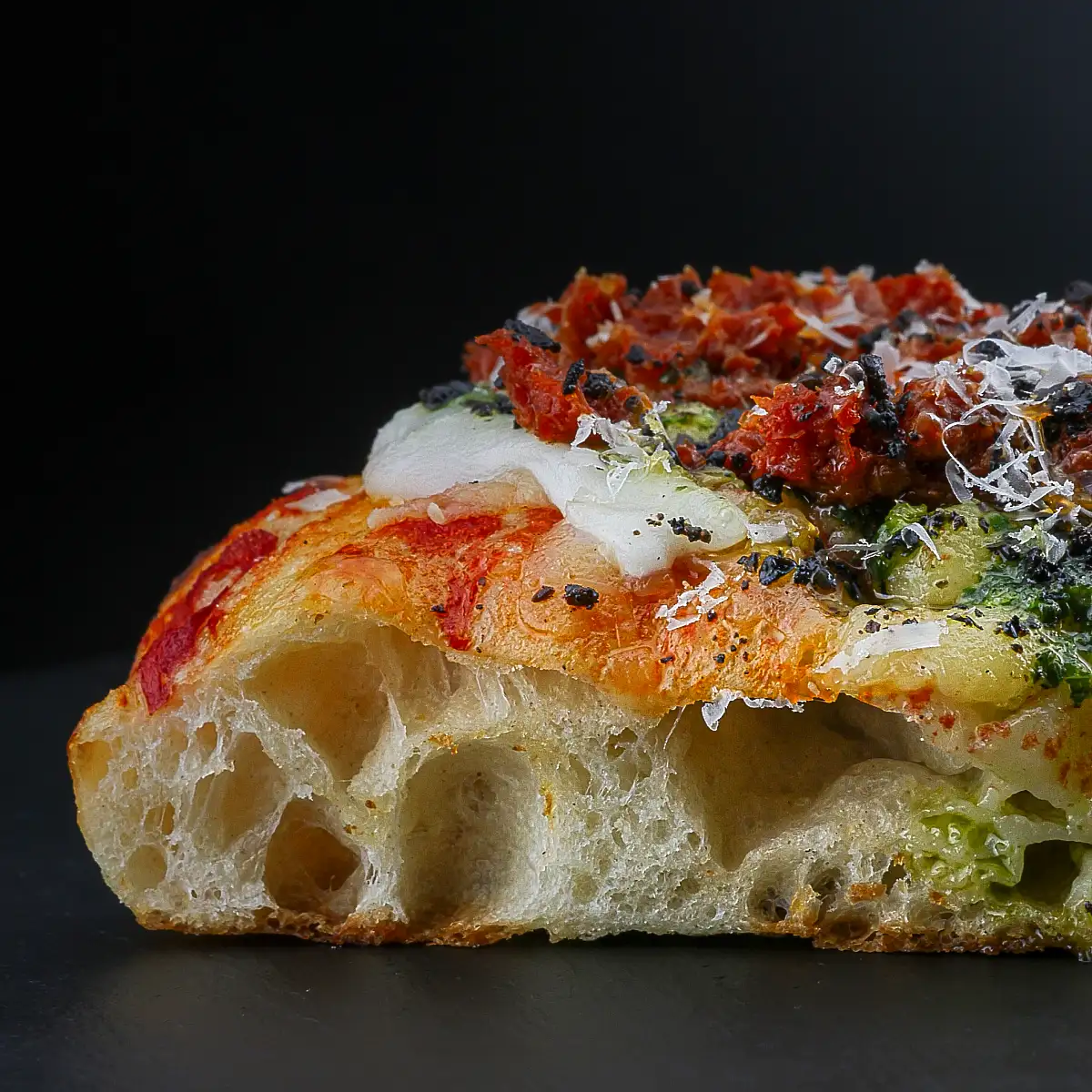
The first rule of understanding how pizza al taglio is served is simple: it is not about handing over a standard slice and that's it. It is about cutting a freshly baked Roman pizza to the measure of your hunger, weighing it, and serving it without sacrificing what makes it unforgettable: an airy base, a croccante crust, and toppings that still feel alive.
In Rome, pizza al taglio is displayed in large rectangular teglie. You choose with your eyes, point to the variety you crave most, and ask for the portion size. It can be a bite to eat while walking, a full lunch, or several combinations to share. That freedom is part of its charm. Che buono.
How to serve pizza al taglio without losing the croccante
Pizza al taglio is traditionally cut with scissors. This is not a picturesque detail for a photo: the scissors allow for better respect for the structure of a high and light dough, without crushing it or dragging the ingredients as could happen with a knife that is not sharp enough. The cut must be clean, direct, and adjusted to the size each person ordered.
Then comes the weight. In many Roman pizzerias, the price is defined by weight, not by a fixed portion. This makes total sense: a pizza with potato and rosemary, for example, does not weigh the same as one with roasted vegetables, mortadella, or mozzarella. The customer chooses exactly how much they want to try and pays for that amount.
Once weighed, the slice is placed on parchment paper or inside a low, sturdy box. The base should not be locked in damp packaging for too long. Steam is the enemy of the croccante. If the pizza comes out of the oven with a perfect crust but is covered hot for several minutes, condensation can soften it and make it lose its character.
That's why, when you are going to eat it immediately, paper is a great option. It supports the pizza, allows you to hold it with your hand, and lets it breathe. If it's to go, a ventilated box and a short travel time make all the difference. Pizza al taglio deserves to arrive with texture, not resigned.
The right temperature matters more than it seems
Roman pizza in teglia can be served hot, warm, or even at room temperature, depending on the recipe. But there is a difference between an intentionally warm pizza and a pizza that cooled down carelessly. The former retains its balance; the latter can lose its fragrance and contrast.
Varieties with melted mozzarella, hot cured meats, or freshly gratinéed ingredients are best enjoyed shortly after leaving the oven. There, the surface is croccante, the cheese has just the right point of elasticity, and every aroma is strongly expressed. Fresher options, like a pizza with vegetables, herbs, or toppings added at the end, can work very well warm.
In a serious pizza al taglio concept, service does not consist of reheating a tray until it wears out. It consists of managing short times, constant batches, and a counter that rotates the product wisely. Quality is not hidden under excessive heat.
With your hand, plate, or utensils?
It depends on the portion and the moment. A small piece, folded just in half, is made to be eaten with your hand. It is casual, quick, and deeply Roman. The crust must hold itself up, with enough firmness not to collapse and enough lightness so that it doesn't feel heavy.
If you ordered a large portion or a pizza with more generous toppings, a plate might be more comfortable. There is no Italian utensil police. What does matter is not making pizza al taglio an uncomfortable experience by trying to follow an imaginary rule. If the slice is large, enjoy it slowly, share it, or cut it in two.
Folding it also makes sense, especially when eating on the go. The fold protects the ingredients and concentrates the heat. But it shouldn't be necessary to keep the pizza from falling apart: when the dough is well-crafted, it has structure. A long fermentation, balanced hydration, and precise baking are noticed right there.
The order of the varieties changes the experience
The magic of pizza al taglio lies in trying more than one. Instead of committing to a single flavor, you can put together a journey. Ideally, start with simpler options and move towards more intense ones, so the flavors do not overshadow each other.
A pizza bianca with olive oil, salt, and rosemary is an excellent way to appreciate the dough. Without a mountain of ingredients on top, you can perceive the air pockets, the aroma of the oven, and that croccante crunch of the base. Then can come a classic with tomato and mozzarella, followed by bolder combinations: mushrooms, Italian cured meats, roasted vegetables, creams, or seasonal ingredients.
When sharing with friends, ordering several small cuts is better than ordering a giant slice of a single flavor. Pizza al taglio was made for curiosity. To point at the counter, debate which one looks best, and end up trying one you didn't expect to order.
What not to do when serving pizza al taglio
There are small errors that completely change the result. The first is cutting identical portions without listening to the client. The beauty lies in adapting the size. The second is stacking several hot portions on top of each other, because moisture builds up and the crust loses its firmness.
Nor is it advisable to put too much sauce on a pizza that is already finished, unless the recipe calls for it. A good Roman pizza does not need to wear makeup to grab attention. Extra sauce can moisten the surface and eclipse a dough that took hours, or even days, to reach its best version.
Another common mistake is treating it like a traditional round pizza. Pizza al taglio is not measured by the number of equal slices or by the diameter of a box. It is measured by texture, weight, the cut you want, and the variety you take to your table.
Pizza al taglio in Costa Rica is eaten with Roman attitude
For those who love to discover authentic food, pizza al taglio offers something different from the well-known format. It is artisanal, visual, and generous without feeling heavy when well made. Its great secret is not just the rectangular shape: it is the technique behind each teglia.
At Bianka® Pizza Romana, this experience takes center stage with 72-hour fermentation doughs, a light texture on the inside and croccante on the outside, and combinations designed so that each slice has an identity. It is not generic pizza in a square format. It is Italian baking culture served by weight, by craving, and with personality.
If you are going to share, ask for variety. If you want to understand the dough, start with a simple option. And if you find a slice hot out of the oven, do not keep it waiting: hold it with your hand, hear that croccante crunch on the first bite, and let Rome do the rest.