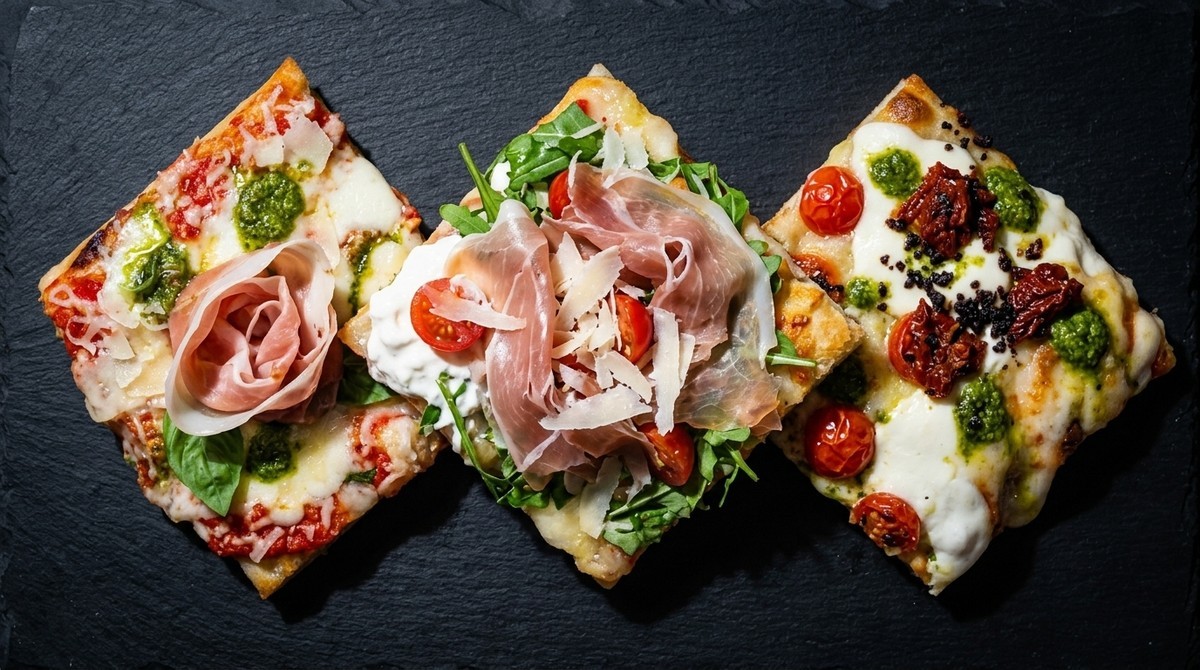
A pizza can look Italian and still fall short where it matters most. Authentic, quality Italian ingredients are not a decorative detail or a fancy word on the menu: they are the starting point for a crust with character, a vibrant sauce, cheese that melts just as it should, and a bite that leaves you craving more. Che buono is never improvised.
In an artisanal approach, every element carries a responsibility. The tomato brings acidity and sweetness. The flour defines structure and lightness. The olive oil imparts aroma, depth, and a clean finish. The cheese brings it all together, but it should never mask the rest. When the product is good and handled with respect, there is no need to overload the pizza to make it feel special.
What Makes an Italian Ingredient Authentic
Authenticity is not just about an ingredient coming from Italy. Origin is important, of course, but so are its variety, its production, its preservation, and the discernment with which it is used. An excellent mozzarella loses its charm if overbaked. A high-quality tomato needs a hand that knows how to balance it, not drown it in sugar, unnecessary spices, or excess cheese.
It is also worth distinguishing between a genuinely Italian product and one with Italian aesthetics. Names, flag colors, and labels might catch the eye, but they do not replace flavor or traceability. A serious ingredient has identity: it tastes like something specific, responds to heat in a certain way, and contributes a recognizable texture.
In Roman-style pizza in teglia, this precision is even more noticeable. The base is airy on the inside and croccante on the outside, so it cannot tolerate watery, heavy, or carelessly placed toppings. Every topping must support the crust's structure, not weigh it down.
The Tomato: Intensity Without Disguise
A good tomato sauce should taste like tomato. It sounds obvious, but it does not always happen. The best versions have fruitiness, balanced acidity, and a natural depth that emerges upon contact with the oven. They do not aim to be sweet like ketchup or harsh like an industrial sauce.
The variety and harvest time change everything. Some tomatoes are meatier, others brighter, and others ideal for a quick bake. That is why not every pizza requires the same sauce. A pizza with burrata, for example, might welcome a fresher, more understated base; a preparation with cured meats might need a firmer tomato to anchor the whole ensemble.
The secret lies in not covering it up. Salt, olive oil, and a well-calculated bake can be enough. When a sauce arrives on the plate tasting flat or overly seasoned, it is usually compensating for a raw ingredient that had nothing to say.
Flour and Fermentation: The Unseen Ingredient
Flour is not just the white powder that forms the dough. Its strength, grind, and absorption capacity influence elasticity, bubbles, and the final crunch. For a well-executed Roman pizza, the crust should feel light even with its substantial presence. It should crunch when sliced while maintaining an open, airy crumb.
Here, technique carries just as much weight as the product. A long fermentation develops flavor, improves structure, and makes for a lighter, easier-to-digest experience. It is neither magic nor an automatic promise of perfection: it depends on the flour, hydration, temperature, and daily handling. But when done right, you notice it from the very first bite.
At Bianka® Pizza Romana, a 72-hour fermentation is part of that precise pursuit: dough given time, texture crafted with intent, and a croccante that needs no over-the-top introduction. The difference is in the pan, in the oven, and in refusing to cut corners.
Authentic Quality Italian Ingredients and Their Balance
The most common mistake when talking about premium ingredients is thinking that more always means better. More cheese, more oil, more cured meats, more toppings. In reality, authentic quality Italian ingredients shine when they have room to breathe. A single well-chosen slice of prosciutto can transform a pizza; five chaotic layers of toppings can leave it muddled.
Regional Italian cooking teaches this lesson time and time again. Simplicity is not a lack of ambition. It is control. A stuffed schiacciata needs bread with character, a generous yet proportionate filling, and clear contrasts: creaminess, saltiness, freshness, and texture. If everything competes, nothing stands out.
Extra virgin olive oil deserves a separate mention. Drizzled at the end, it can elevate aromas of herbs, tomato, and toasted crust. Used excessively or subjected to cooking that does not suit it, it can overpower the dish. The same goes for cheeses like mozzarella, stracciatella, ricotta, or pecorino: each has its own moisture, salt level, and behavior. Choosing well is only half the battle. Knowing when to add it is the other half.
How to Recognize Quality When Ordering Pizza
You do not need to be a chef or know every region of Italy to eat better. You just need to pay attention to a few clues. First, look at the crust: a quality Roman pizza in teglia should have a golden, firm, and crispy base, not a dry rim or a dense, doughy crumb. Irregular air pockets usually tell a story of patient fermentation and proper hydration.
Next, observe the toppings. The cheese should appear melted, not turned into an even slick of grease. Vegetables should retain their color and character. Cured meats, when added after baking, should preserve their texture and aroma. The tomato should neither flood the base nor disappear completely beneath the rest.
Finally, consider the finish on your palate. A great pizza leaves you with lasting flavor, not heaviness. It can be bold, creamy, or hearty, but it must maintain balance. If a slice feels heavy by the second bite, there was likely too much moisture, fat, or bulk. Sometimes a more minimalist pizza is the most memorable.
Freshness, Seasonality, and Discernment
Authenticity does not require importing absolutely everything. That is an important distinction. There are Italian ingredients that provide an identity that is hard to replace—especially certain cheeses, cured meats, flours, preserves, and oils. But a responsible kitchen also understands the value of fresh local produce when it fits the recipe and meets the standard.
The right question is not just “Did it come from Italy?” It is “Does it bring something genuine to this dish?” A local, seasonal tomato, fresh and handled with care, can make far more sense than an ingredient transported carelessly across the globe. Conversely, a selected Italian mortadella or a pecorino with a distinct profile can deliver that regional accent you simply cannot get from a generic version.
Authentic quality stems from that level of standards: seeking the right ingredient, not the loudest one. Choosing based on flavor, texture, consistency, and respect for the recipe. It also means accepting that some combinations work better at certain times of the year, or that an item might sell out when freshness is prioritized over endless inventory.
The Difference Is in the Bite
A memorable pizza does not rely on a single star ingredient. It depends on how the fermented crust, tomato, cheese, oil, and every topping harmonize. It depends on the crust arriving crisp, the center staying airy and light, and every flavor having a reason to be there.
That is what makes Roman pizza so special: artisanal precision with a straightforward attitude. Square, croccante, generous, and made to share, photograph, and talk about with friends. But above all, made to be enjoyed straight out of the oven.
The next time you choose a pizza, do not settle just for the name of the ingredient. Ask what it brings to the recipe, taste the texture of the crust, and let the flavor have the final word. When origin meets technique, the difference does not need much explanation: you taste it in every bite.