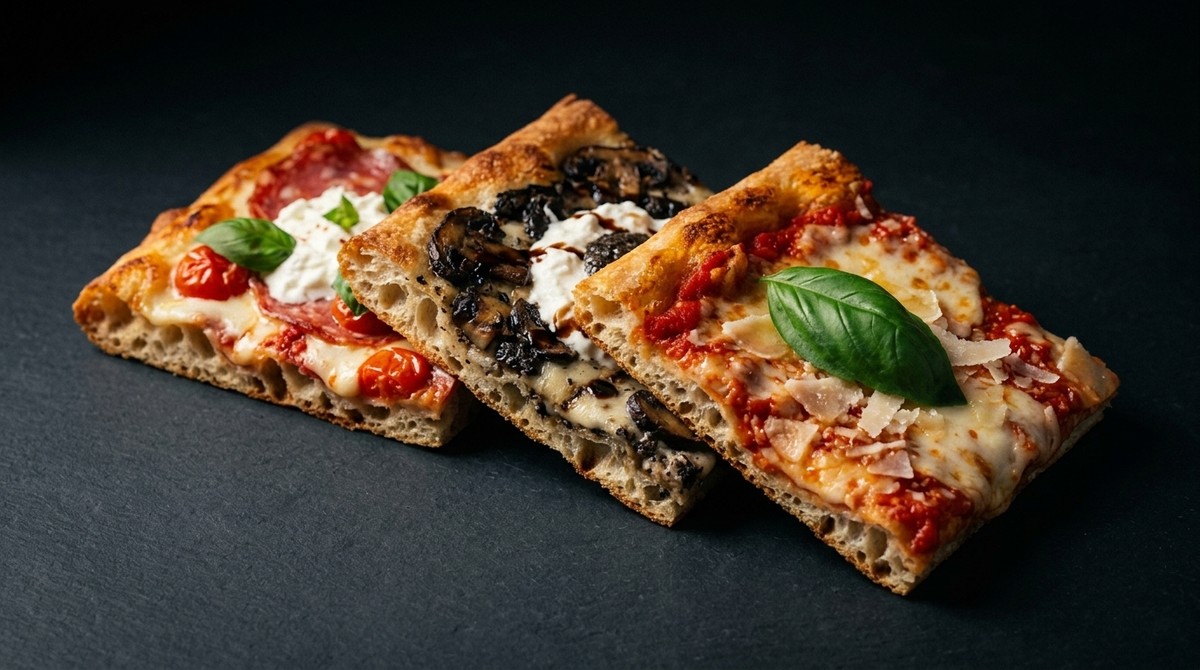
A pizza fresh out of the oven calls for more than just a cold drink. It calls for balance. A good pizza and beer pairing isn't about choosing the most well-known brand, but about finding a beer that complements the dough, refreshes the palate, and lets each ingredient have its moment. When the pizza is Roman-style—croccante on the outside, airy on the inside, and built on slow fermentation—that choice becomes even more interesting.
The right beer can elevate the sweetness of the tomato, contain the intensity of an aged cheese, or cut through the richness of porchetta. The wrong one can mute aromas, add unnecessary bitterness, or make an extraordinary pizza feel heavy. The goal isn't to overcomplicate a meal that is already delicious: it's to take it to another level. Che buono.
Pizza and beer pairing: the rule that actually works
Before memorizing pairings, you need to understand three things: intensity, contrast, and affinity. Intensity means that a delicate pizza needs a beer that won't overpower it, while a flavor-packed pizza can handle more body and character. A light lager can get lost against spicy cured meats; an overly bitter IPA can completely overpower a white ricotta pizza.
Contrast works when the beer cuts through a dominant sensation. The carbonation and dry finish of a pilsner, for example, are refreshing after a bite of mozzarella, mortadella, or lots of cheese. Affinity, on the other hand, brings together flavors that naturally harmonize: the toasted notes of an amber ale hit a delicious high note with mushrooms, caramelized onions, or oven-roasted ingredients.
Texture also matters. Roman pizza in teglia has a light, airy base with a croccante bite that deserves to stay lively until the very last square. Beers that are too sweet, heavy, or poorly carbonated can make the whole meal feel dense. That’s why, in most cases, a beer with clean bubbles and a good finish is a smart bet.
Pizza Margherita and lager: the classic that never fails
Tomato, mozzarella, basil, and dough. It sounds simple, but a well-made Margherita thrives on the details: acidity, milky freshness, herbal fragrance, and the toasted notes of the crust. An Italian lager, a German helles, or a dry pilsner make excellent companions because they bring freshness without stealing the spotlight.
A pilsner tends to be the most precise choice if the tomato has good acidity. Its moderate bitterness and crisp finish cleanse the palate of the cheese, making each bite feel light again. If you prefer less bitterness and a rounder mouthfeel, a helles offers soft malts that embrace the crust without being cloying.
Avoid an overly hoppy beer here. Basil can clash with the more aggressive resinous or citrus profiles of certain IPAs. The Margherita doesn't need an extra show: it needs precision.
Pizza with prosciutto, mortadella, or porchetta
Italian cured meats have fat, salt, and deep aromas. That’s where a beer with good carbonation becomes essential. A Czech pilsner, a balanced pale ale, or a dry saison help cleanse the palate without masking the flavor of the star ingredient.
With mortadela and pistachio, a saison can be especially interesting. Its spicy notes and dry profile complement the nut and cut through the creamy texture of the mortadella. With prosciutto, a crisp, golden lager is hard to beat: salt, bubbles, croccante, and repeat.
Porchetta allows you to dial up the intensity a bit. A pale ale with medium bitterness can hold its own against the herbs, juicy meat, and crispy roasted edges. There's no need to reach for an extreme beer. The goal is simply to leave you craving the next bite.
Spicy pizza: look for freshness, not more heat
When dealing with 'nduja, spicy pepperoni, chili peppers, or hot honey, many people order an IPA thinking the hops will balance things out. Sometimes the opposite happens: high bitterness amplifies the heat and leaves a burning sensation. If you want to enjoy the heat rather than fight it, look for more refreshing beers.
A pale lager, a wheat beer, or a blonde ale are better choices. Their light body, high carbonation, and lower bitterness tone down the heat between bites. A wheat beer can also provide subtly fruity notes that pair wonderfully with tomato, honey, or roasted vegetables.
Is there room for an IPA? Yes, but go for a hazy IPA with moderate bitterness and a tropical profile, especially if the pizza features sweet components like honey, well-caramelized pineapple, or onions. It's a bolder combination, not a universal rule.
White pizza, cheeses, and wheat beer
Pizzas without tomato sauce usually feel creamier and smoother. Ricotta, mozzarella, stracciatella, potatoes, rosemary, mushrooms, or aged cheeses build flavors that welcome an aromatic yet gentle beer. A German hefeweizen or a Belgian witbier could be the perfect answer.
A hefeweizen brings notes of bread, banana, and mild spices that complement long-fermentation doughs and milky cheeses. A witbier, with its touch of citrus and spice, works wonders if there are vegetables, rosemary, or fresh elements involved. In both cases, the carbonation prevents the pairing from feeling overly rich.
With blue cheeses or heavily aged varieties, the game changes. A Belgian dubbel or an amber ale can better support that boldness, thanks to notes of caramel, dark fruit, and toasted bread. These are beers for savoring more slowly, ideal when a pizza arrives packed with flavor and character.
Mushrooms, roasted vegetables, and malty beers
Mushrooms bring umami, earthiness, and depth. Caramelized onions bring sweetness. Roasted eggplant adds smoke and texture. For these pizzas, malty beers take center stage: an amber ale, a märzen, or a light brown ale can create a warm and elegant pairing.
The key is not to confuse malty with sweet. An excessively sugary beer will make the pizza fall flat. Look for toasted, balanced profiles with enough dryness on the finish. A märzen, for instance, has a medium body and a baked bread note that speaks directly to a well-crafted Roman crust.
If your veggie pizza includes pesto, arugula, or lemon, a moderate, citrus-forward pale ale might work better than a dark beer. The leading ingredient always dictates the direction.
Temperature, glassware, and the mistake of drinking it ice-cold
A beer that is served too cold loses its aroma and flattens out. For light lagers, a temperature of around 4 to 6 degrees Celsius preserves freshness without masking character. Pale ales, wheat beers, and fuller-bodied styles benefit from a few extra degrees. There’s no need to turn dinner into a technical tasting, but do let the beer express itself.
The glass matters too. A clean glass allows you to appreciate the foam head, which releases aromas and softens the perception of bitterness. Drinking straight from an ice-cold bottle might be convenient, but for an artisanal pizza, it’s worth pouring it out. The experience transforms from the very first sip.
At Bianka® Pizza Romana, where 72-hour fermentation and a croccante texture are central to what we do, pairings are best enjoyed unhurried. Order a beer to match your chosen pizza, try a bite on its own first, and then follow it with a sip. That brief pause will tell you if you've found the perfect balance.
The best pairing won't always be the most obvious or the most intense. It will be the one that keeps the crust crisp, lets the star ingredient shine, and makes you want to order another square the moment you finish.