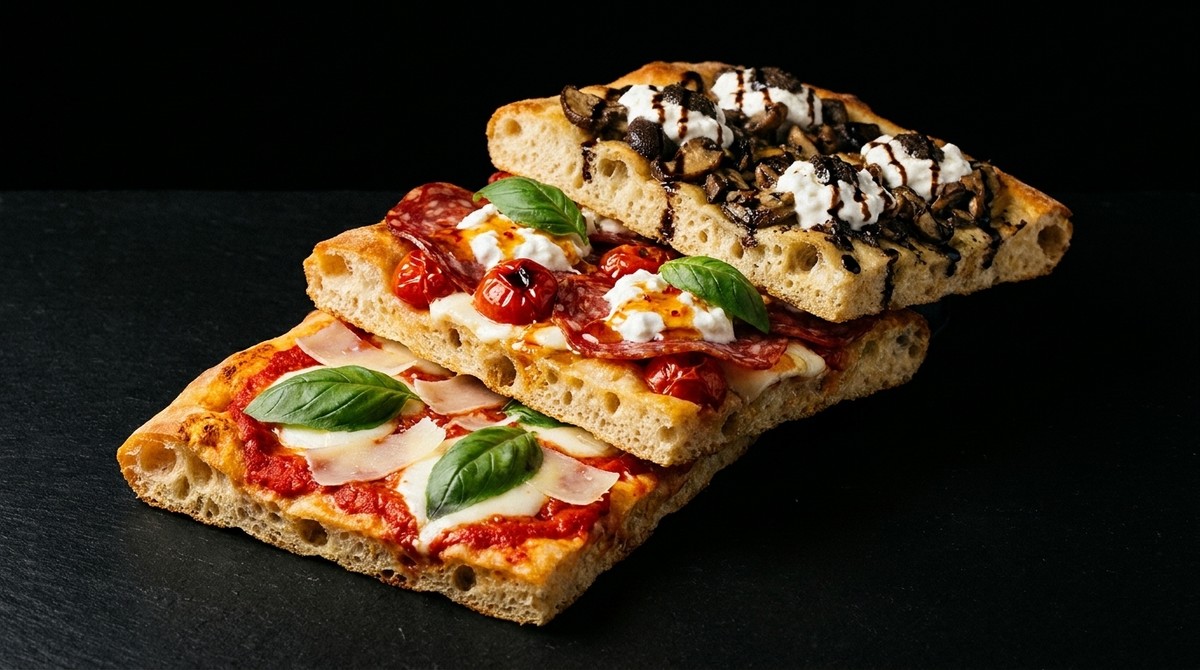
The first bite of a well-made Roman pizza changes the rules: a light base, croccante edges and toppings that speak up instead of getting buried under cheese. That's why Italian pizza pairing takes more than ordering any cold drink. The right choice can lift the acidity of the tomato, cut through the richness of mortadella, stand up to the heat or let a filled focaccia take center stage.
With pizza in teglia, texture matters as much as the topping. A long-fermented dough has more flavor, more air and a toasty character that deserves a drink with some energy. You don't need to follow rigid rules or show off your knowledge at the table. The point is to eat better, share better and find that contrast that makes you say: che buono.
The basics of Italian pizza pairing
One simple idea sits behind almost every good pairing: the drink should refresh your palate without wiping out the pizza. Tomato calls for acidity. Cheese calls for freshness or bubbles. Cured meats call for tension, fruit or moderate bitterness. Spicy toppings welcome a touch of sweetness and a properly cold temperature.
Roman pizza in teglia has a delicious advantage: you can order more than one flavor and try several pairings at the same table. A slice of margherita behaves differently from one with prosciutto, a white pizza or a filled schiacciata. Switching drinks between slices is part of the experience, and nobody should call it fussy.
Intensity is worth watching too. A pizza with vegetables, ricotta or fresh mozzarella can get lost next to a heavy, very tannic red. A combination with salami, intense mushrooms or aged cheese, on the other hand, needs something with structure. The wine doesn't have to be expensive and the beer doesn't have to be craft. The drink has to make sense with the bite.
Wine and pizza: the pair that wins on balance
Wine works especially well when you choose it by the sauce, the saltiness and the fat. For pizzas with tomato, a young red with good acidity is a safe bet. Think of a light Sangiovese, a Barbera or a young Chianti: wines with cherry, lively acidity and moderate tannin. They go with the sauce without clashing and clean your palate before the next bite.
Margherita pizza and fresh wines
Margherita looks simple, but it demands precision. Tomato, mozzarella, basil and dough: there's nowhere to hide. A young, light-bodied Italian red is a great partner, especially if the sauce has character. If you prefer white, choose a dry, lively one, like a fresh Pinot Grigio or a Vermentino.
The goal is to respect the delicacy of the mozzarella and support the acidity of the tomato. A very ripe Cabernet or an overly oaky wine can overpower the dish. Here, less weight means more flavor.
Cured meats, bold cheeses and reds with personality
When the pizza has pepperoni, salami, mortadella, prosciutto or stronger cheeses, you can step up the intensity. A young Montepulciano, a medium-bodied Nero d'Avola or a fresh Syrah can answer the fat and salt very well.
There's one important nuance: if the cured meat is spicy, avoid reds that are very tannic and high in alcohol. Spice amplifies the heat of the wine and can make the pairing feel heavy. Look for fruit, acidity and a juicy feel instead. A dry, lightly chilled Lambrusco, for example, is a brilliant move: it has bubbles, fruit and the ability to refresh you after every slice.
White pizza, mushrooms and wines with texture
White pizzas don't have the obvious acidity of tomato, so the drink has to bring some light. With mozzarella, ricotta, potatoes, rosemary or caramelized onion, a dry white with some body works wonders. A Chardonnay without too much oak, a Soave or a medium-bodied wine with good acidity gives you balance without stealing the show.
For mushrooms, truffle or earthy toppings, a Pinot Noir can be spectacular. It has elegance, subtle notes of fruit and earth, and it doesn't flatten the dough. If the pizza includes cream, blue cheese or a generous load of cheese, the bubbles of a brut sparkling wine also do a flawless job.
Beer with Roman pizza: freshness, croccante and contrast
Beer is a natural ally of pizza, but not every beer suits every slice. Carbonation refreshes, cuts through fat and gets along very well with a crisp base. On an afternoon with friends or at a more relaxed dinner, it's hard to go wrong if you understand the style.
A pale, dry lager goes with almost any pizza without taking over. It's ideal for a margherita, a vegetable pizza or a filled focaccia where you want to taste every ingredient. Its clean profile keeps the dough in the lead.
With pepperoni, salami or smoky flavors, an amber lager or a balanced pale ale can bring a very pleasant toasty, bitter note. Just don't overdo the hops. A very bitter IPA can make the tomato taste harsh and the spice aggressive. There are exceptions, of course: if you love hoppy beers and the pizza has sweet toppings like hot honey, caramelized onion or squash, the contrast can be addictive.
For a white pizza with mortadella, pistachio or mild cheeses, a citrusy, spiced wheat beer makes a light, aromatic and very enjoyable pairing. Wheat beer wraps around the creaminess without weighing the experience down.
Non-alcoholic drinks that measure up
You don't need alcohol to enjoy a great pairing. In fact, some non-alcoholic options bring out the pizza better than plenty of poorly chosen wines. Sparkling water is a classic for a reason: it cleanses your palate, keeps your mouth fresh and doesn't interfere with any ingredient. Served very cold, it's a serious partner for a long-fermented pizza.
A not-too-sweet limonata works especially well with pizza topped with vegetables, basil, burrata or fresh mozzarella. The lemon adds brightness, but it should stay restrained. If the drink is too sugary, the tomato can taste more acidic and the cheese heavier.
Bitter or citrus Italian sodas, served with plenty of ice, are a good option for rich, salty flavors. Their gentle bitterness cuts the intensity of cured meats and cheeses, while the bubbles go along with the croccante. With spicy pizza, look for a fresh drink with a fruity edge and little sugar: it calms the fire without turning dinner into dessert.
How to set up a table that invites tasting
If the table is sharing several pizzas, start with the more delicate flavors and work toward the more intense ones. First a margherita, a vegetable option or a light white pizza. Then the slices with cured meats, spice or stronger cheeses. That way your palate doesn't reach the subtle flavors already worn out.
You can order a different drink to share and turn the meal into a small tasting. A glass of fresh red, a pale beer and sparkling water cover a lot of ground. You don't need an endless list to eat with good judgment.
Temperature decides too. Whites and sparkling wines should arrive cold but not frozen. Light reds can be served just slightly chilled, especially in Costa Rica's climate. And beer needs to be cold, though not so icy that its aromas shut down. These small details separate a decent meal from one you truly remember.
At Bianka® Pizza Romana, a square pizza with 72-hour fermentation invites exactly that: to pause, look at the texture, break off a slice and try the pairing that suits it best. There's no single perfect answer. There's a table, a croccante pizza and the urge to discover which bite will earn the next round of applause.