Jun 10, 2026
Pizza al taglio vs. round pizza: which one to choose
There is a scene that explains it all. You order a pizza thinking of the same old thing, and suddenly, a rectangular, tall slice arrives—croccante on the outside, airy on the inside, and with a base that barely makes a sound when you bite into it. That is where the conversation about pizza al taglio vs. round pizza truly begins. It is not just a difference in shape. It is technique, texture, eating rhythm, and even intention.
In Costa Rica, where round pizza has been the automatic reference for years, Roman pizza al taglio enters as a more precise, more baker-like, and much less generic offering. It has its own personality. And when it is well made, you can tell from the very first cut.
Pizza al taglio vs round pizza: the real difference
The easiest comparison would be to say that one is square and the other is round. But that falls incredibly short.
Round pizza is usually thought of as an individual pizza or one to share, stretched on the spot and baked whole with a more uniform structure. Depending on the style, it can be thin, flexible, wetter in the center, or with a pronounced crust. It is the most well-known pizza and the one that dominates most menus.
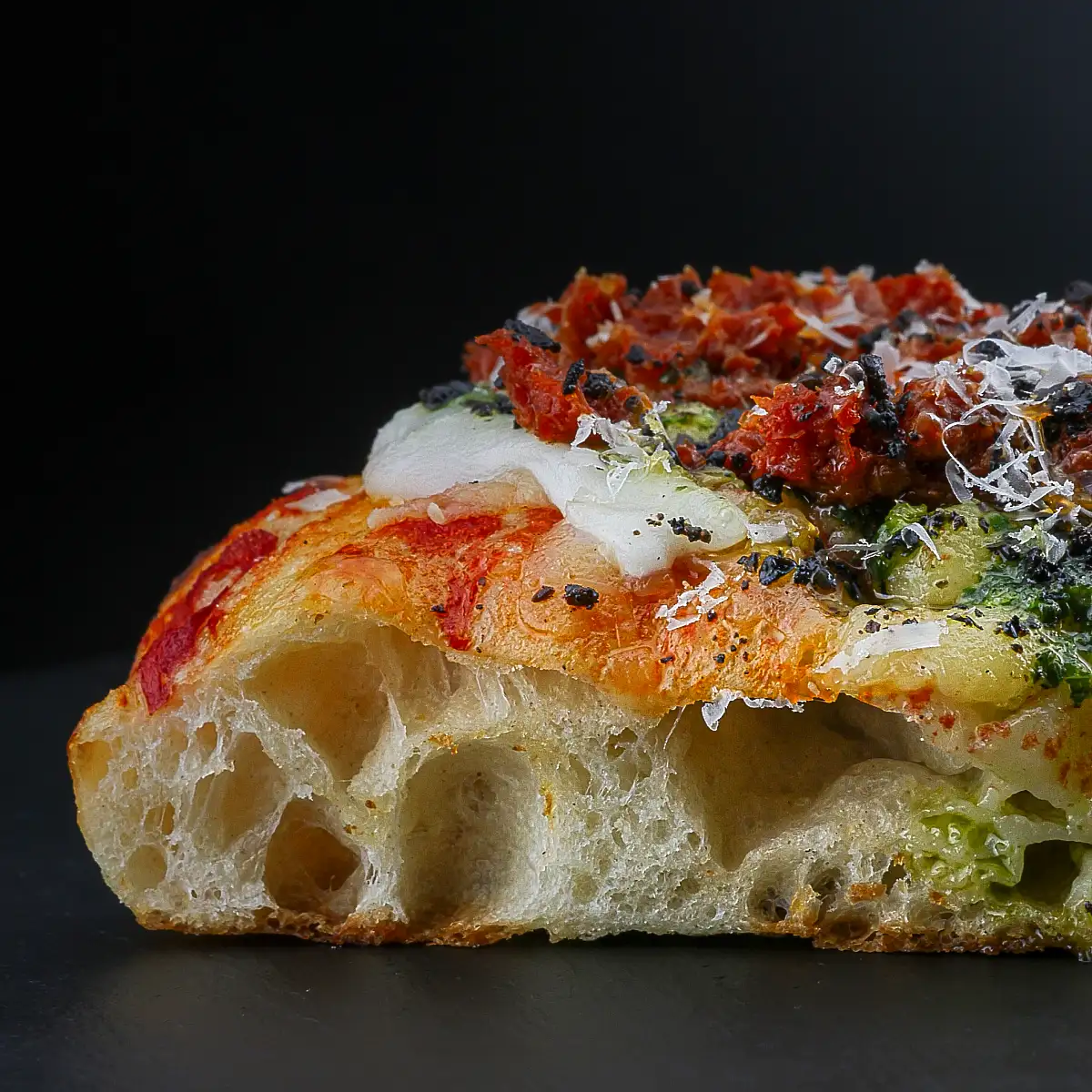
Pizza al taglio, on the other hand, comes from another logic. It is baked in a pan, made with high-hydration doughs and long fermentations, and then cut by the slice. The ideal result is not a flat, lifeless dough, but a light crumb full of air pockets, with a firm and crispy base. It is a pizza that inherits a lot from the baker's craft.
That point matters. Because when dough is treated with time, precision, and good technique, everything changes: flavor, digestibility, and texture. That is why a well-executed pizza al taglio feels more complex and more memorable.
The dough changes everything
If someone really wants to understand the showdown of pizza al taglio vs. round pizza, they have to start with the dough.
In traditional round pizza, the dough usually seeks elasticity in order to be stretched into a disc and support sauce, cheese, and toppings in a relatively quick bake. That can yield very good results, of course, but it also opens the door to heavier or less-developed versions when the focus is on getting orders out quickly and producing in volume.
Roman pizza al taglio plays a different game. Here, the long fermentation is not a marketing detail. It is part of the product's DNA. A dough with 72 hours of fermentation, for example, develops flavor, structure, and a lightness that does not happen by accident. The crust takes on color, the base becomes croccante, and the inside retains just the right amount of moisture so that each bite feels alive, not dense and heavy.
It is not always about which is "better" in the abstract. It is about what experience you want. If you are looking for a pizza with a more bread-like profile, with a crunchy texture and a more artisanal feel, pizza al taglio has a very clear advantage.
Texture: croccante vs flexibility
Round pizza usually privileges a more continuous, more flexible bite, where the slice folds, the cheese stretches, and the center can be softer. It has its charm and works very well in certain styles.
Pizza al taglio aims for a different sensation. The base must hold up. The exterior must crunch. The interior must be airy, never dry. That combination of crispiness and lightness is precisely what makes it so addictive. It does not fill you up all at once, nor does it feel clumsy. It feels precise.
And that detail connects perfectly with an audience that is no longer satisfied with just any pizza. Nowadays, many people want to notice technique, they want product, they want something that feels special from the first photo to the last bite. Che buono when that happens.
The format also changes the experience
A pizza is not just eaten. It is also shared, ordered, craved, and adapted to different plans.
Round pizza has a classic logic. You arrive with friends, order one or several whole pizzas, divide them into slices, and that is it. It is familiar, it works, and everyone understands the code.
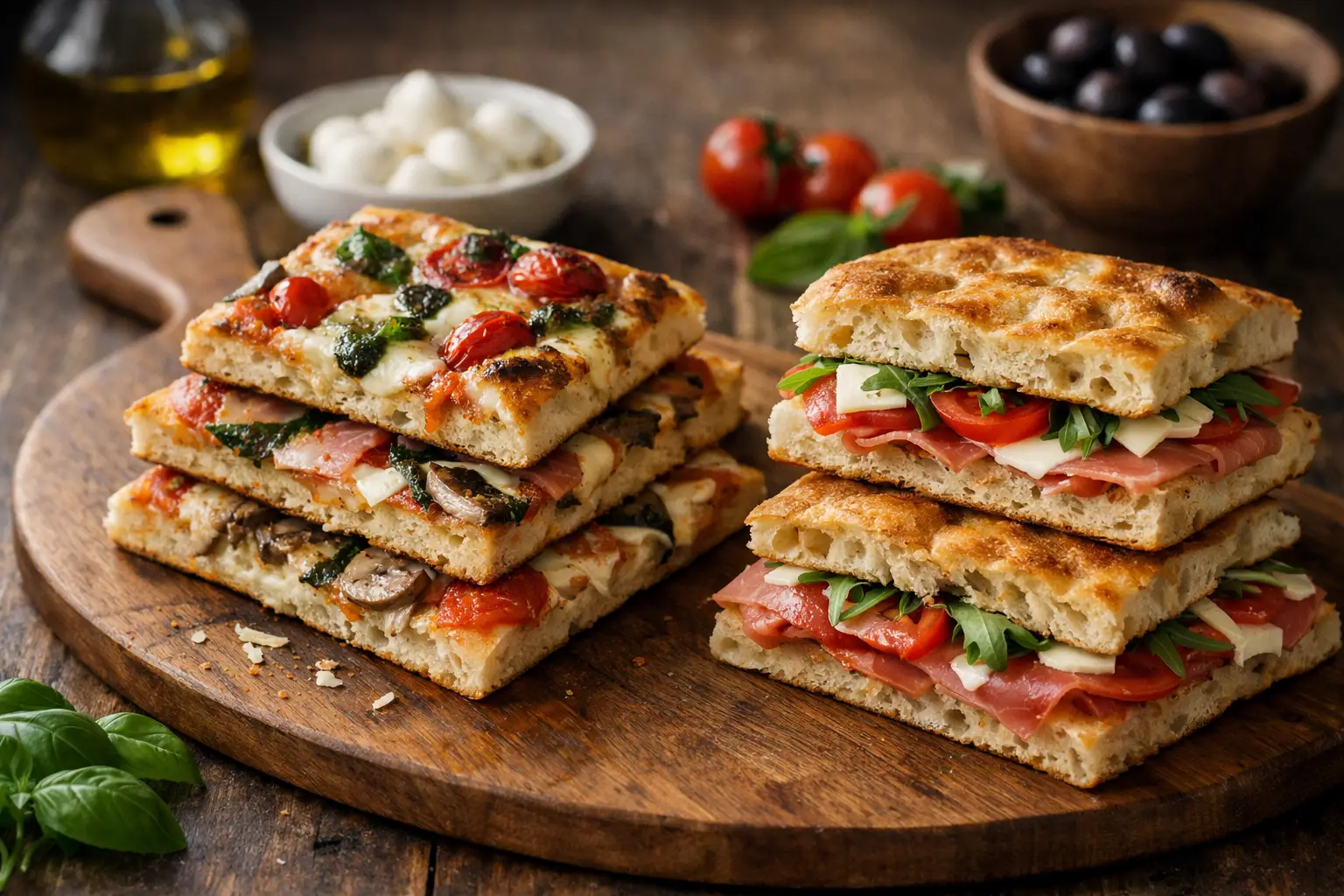
Pizza al taglio is more flexible. Since it is sold or served by the slice, it allows you to try different combinations in a single meal. That makes it ideal for those who enjoy discovering flavors, mixing toppings, or eating something more dynamic. It also makes the product lend itself very well to more casual lunches, relaxed gatherings, or cravings where you want variety without committing to a single whole pizza.
This format by the slice also has a sensory advantage: each piece maintains a very pleasant relationship between crust, base, and toppings. You do not depend on a soggy center or slices that lose their structure. If it is well made, each piece arrives with its own identity.
Toppings: less excess, more balance
Another key point in pizza al taglio vs. round pizza is how the ingredients are understood.
Round pizza is often associated with visual abundance. Lots of cheese, many combinations, stuffed crusts, extra sauces. That can be fun, but it can also cover up the dough, which in the end should be the star.
Roman pizza al taglio, when it respects its origins, tends to be more selective. Not out of stinginess, but out of judgment. The idea is for the toppings and the dough to work together. For the ingredient to add value without crushing the structure. For there to be contrast rather than saturation.
This makes simple flavors shine brighter. A good tomato sauce, a well-chosen mortadella, vegetables with character, cheeses that accompany rather than dominate. In this style, luxury lies in the balance. And that is a big difference compared to many heavier or overloaded round pizzas.
Which one is more filling?
It depends. And it is worth saying it straight out.
Round pizza can feel more substantial from the start, especially if it carries a heavy load of cheese or toppings. It is a more immediate satiety. Sometimes delicious. Sometimes excessive.
Pizza al taglio can surprise you because, even though it has a taller dough, it does not necessarily feel heavier. If the fermentation was correct and the hydration is well worked, the experience is usually lighter than it looks. You get full, yes, but with a different feeling. More satisfied, less sluggish.
For those who value eating delicious food without ending up defeated by the dough, that difference carries a lot of weight.
When to choose pizza al taglio and when to choose round pizza
There is no need to make a drama out of this. Both have their place, but they do not serve exactly the same purpose.
If what you want is the classic benchmark, the familiar ritual, and a more conventional experience, round pizza delivers. It goes well with simple plans, quick group orders, or when the craving points to the familiar.
If you want a pizza with more character, a more crafted texture, and a proposal that feels authentically different, pizza al taglio steals the show. It is ideal when you want to eat something with a conversation behind it. Something that does not look like it was pulled from the same old catalog.
It is also the right option for those who enjoy Italian gastronomic culture beyond the clichés. Because Italy is not just one pizza. And Rome, in particular, has a powerful baking tradition that deserves its own space.
The choice also speaks of your taste
There are people who look for comfort food without thinking too much. And there are people who want to notice the difference between an ordinary dough and a dough crafted with patience. Neither stance is wrong. But they are not the same.
Choosing pizza al taglio usually connects with a sharper curiosity. With a desire to try something better executed, more artisanal, more faithful to a specific tradition. For a foodie, urban, and quality-minded audience, that is no minor detail. It is part of the complete experience.
Why Roman pizza al taglio is gaining ground
It is not just a trend for the sake of trends. It is a response to a consumer who has become more demanding.
Today, origin matters. Technique matters. It matters whether the dough has real development or if it just gets by. And the aesthetics of the product also matter, because eating delicious food and eating something that excites you visually go more and more hand in hand.
In this context, Roman pizza al taglio has a whole lot to say. It offers authenticity, an unmistakable texture, and a premium experience without falling into exaggeration. It feels contemporary, yet it has tradition. It looks different, but not forced. And when made with true craftsmanship, it far surpasses generic pizza that just repeats formulas.
That is why specialized spots like Bianka® Pizza Romana are drawing so much attention in Heredia. They do not arrive to copy the usual. They arrive to raise the bar.
So, pizza al taglio vs round pizza?
If the question is which one adapts better to a more authentic, croccante, and memorable gastronomic experience, pizza al taglio has very serious arguments in its favor. It does not rely on tricks. It relies on dough, fermentation, structure, and judgment.
Round pizza still has its place, of course. But when you try a well-made Roman pizza al taglio, you understand that it was not just another way of serving pizza. It was another category.
The next time you crave pizza, it is worth asking yourself something more interesting than "what flavor?" Ask yourself what kind of experience you want at the table. That is where the real difference begins.