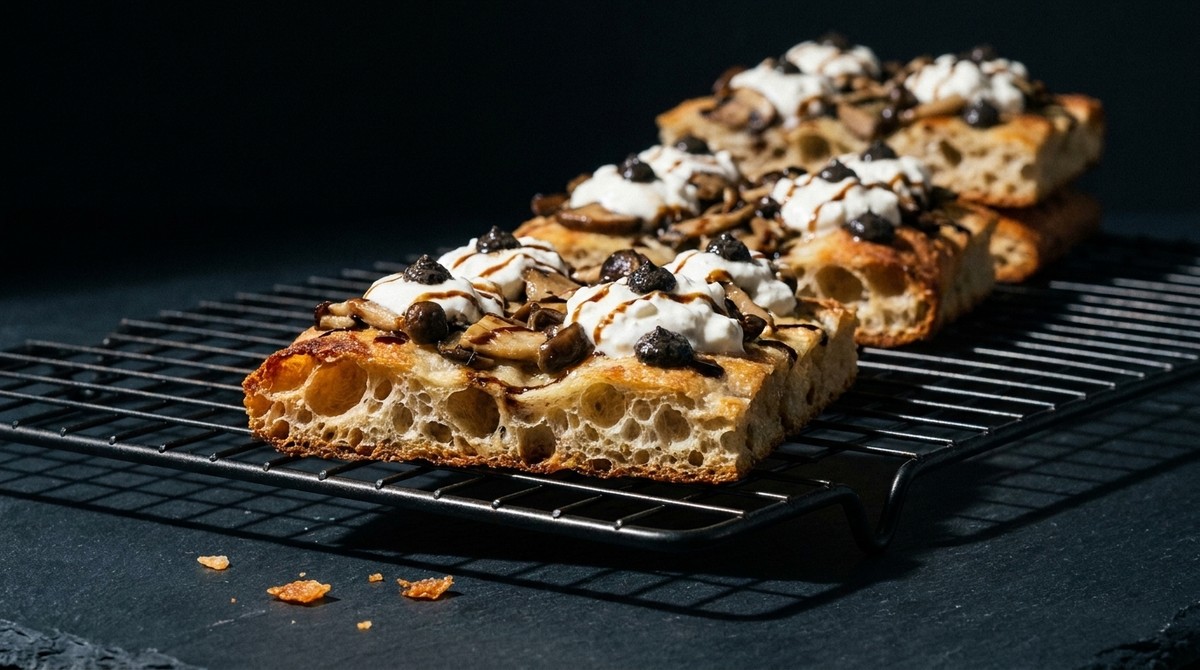
A crispy pizza bianca is not recognized by a mountain of toppings. It is recognized from the first break. The base sounds when you cut it, holds the topping without collapsing, and leaves a light, airy, deeply croccante texture. It is pizza, yes, but with a different attitude: more bakery-like, more Roman, and much less predictable.
For anyone who is already tired of generic round pizza, this is welcome news. Pizza bianca puts the dough up front and turns every bite into a precise contrast between a golden crust, an alveolated interior, and flavors that do not need to hide behind tomato sauce.
What makes a crispy pizza bianca different?
"Bianca" means white. In its most essential version, it is a pizza without tomato sauce as a base. That does not mean it is simple or that it lacks character. On the contrary: once the tomato is removed, the quality of the dough, the olive oil, the salt, the cheese, and every chosen ingredient is completely exposed.
The Roman tradition has a lot to say here. Pizza al taglio and pizza in teglia are baked in a pan, generally in a rectangular or square format, and served by the slice. Their personality is in the base: thin and firm underneath, full of small bubbles inside, and with a bite that holds up as the minutes pass.
A good pizza bianca should not feel dry, heavy, or hard like a cracker. The goal is something else: a crust that crunches without hurting the palate, followed by a moist, light crumb. It is a technical balance. If hydration is lacking, the dough loses air. If the toppings hold too much moisture, the base softens. If the bake does not reach the exact temperature or time, that golden color that turns flour and oil into aroma never appears.
That is why crispy pizza bianca is a product of detail. It looks casual. It is not.
Long fermentation changes everything
Texture is not born when the oven opens. It starts much earlier, with fermentation. A dough worked with patience develops flavor, elasticity, and a structure able to trap air. Instead of a compact, heavy pizza, the result can be a base of irregular alveoli, light to lift and satisfying to bite.
A 72-hour fermentation is one of the great keys of the contemporary Roman approach. It gives the dough time to mature and build complexity. Soft cereal notes appear, and a depth that hurried processes cannot achieve.
It is not magic, and it is not a universal promise. The experience depends on the recipe, the temperature, the quality of the flour, and the handling of the dough. But when the technique is well executed, you notice it. The pizza feels less dense, the edge does not steal the show with too much bread, and the base keeps that croccante tension that invites you to keep eating.
It also explains why a well-made Roman pizza does not need an excess of cheese. The dough has enough personality to support cleaner combinations. Mozzarella, stracciatella, potatoes, rosemary, mortadella, mushrooms, roasted vegetables, or quality cured meats can shine clearly when the base is up to the task.
The crunch is not just about the oven
There is an enormous difference between a pizza just out of the oven and a pizza that arrives at the table with a wet base. The enemy of the croccante is poorly managed moisture. A sauce, an overly watery cheese, or vegetables with no prior preparation can, in minutes, dull a dough that took days to ferment.
That is why, in a crispy pizza bianca, the toppings should be thought through according to how they behave in the oven. Some are cooked first to concentrate flavor. Others are added at the end to keep their freshness. Cheeses are dosed so they melt without flooding the base. Olive oil is used to add perfume, color, and that lightly fried surface that makes the edge unforgettable.
The pan matters too. Pizza in teglia needs direct contact and enough bottom heat to form a firm crust. Then comes the bake point: too little time leaves a pale base; too much time can dry the crumb. Excellence sits right in the middle, where the bottom is golden and audible, while the interior keeps its elasticity.
And there is a detail many people overlook: cutting and serving on time. Roman pizza is at its best when the steam still perfumes the slice, but is no longer trapped underneath it. Waiting too long can soften the crust. Eating it freshly baked is part of the experience, not a whim.
White, but never boring
The absence of tomato opens a wide field for more aromatic combinations. Rosemary and coarse salt take pizza bianca toward its most classic version, almost focaccia. Thinly sliced potato adds softness and a creamy texture that contrasts with the base. Mortadella, burrata, or a cheese cream add a more intense, celebratory side.
There is also room for vegetable profiles. Mushrooms, caramelized onion, zucchini, artichoke, or roasted eggplant work very well because they add umami and sweetness without fighting the dough. If you want a fresh note, arugula or a creamy cheese added at the end can completely change the slice.
The key is not to confuse abundance with quality. An overloaded pizza bianca loses structure. The center gets wet, the flavors blur, and the dough disappears. Two or three well-chosen elements, on the other hand, let every bite have an identity. Less noise. More product.
How to enjoy a Roman pizza at its best
Crispy pizza bianca works as well for sharing as it does for a lunch with personality. But it is worth ordering with an experience mindset, not a fast-food one. First try a simple slice, with olive oil, salt, and rosemary, to understand the dough. Then move on to a more generous combination. That way the difference between the base, the cheese, and the toppings comes through more clearly.
If you pair it with a drink, look for something that refreshes without covering the toasted flavors. A light, dry beer, sparkling water, or a citrus drink can work very well. For more intense options with cured meats or cheeses, a drink with acidity helps clean the palate between bites.
Taking it home? Time matters. Pizza in teglia is sturdy, but not invincible. If you need to reheat it, avoid the microwave: it brings back heat, but sacrifices the crunch. Better a few minutes in a hot oven or a covered skillet, depending on the thickness of the slice. The idea is to reactivate the bottom without drying the crumb.
A slice you remember
In Costa Rica, Roman pizza still has that effect of discovery worth celebrating. It does not arrive to replace every pizza you already know. It arrives to offer something different: a square format, a long-fermented dough, a croccante crust, and a more precise way of building flavor.
At Bianka® Pizza Romana, that difference is lived slice by slice and understood from the first cut. It is an invitation to step out of the usual, book a table with friends, or order something that truly feels special.
The next time you look for pizza, do not choose only by the amount of cheese or the size. Ask how the dough is fermented, how the base is baked, and what happens when they cut it. If the answer is in that clean, golden crunch, you are on a very good path. Che buono.