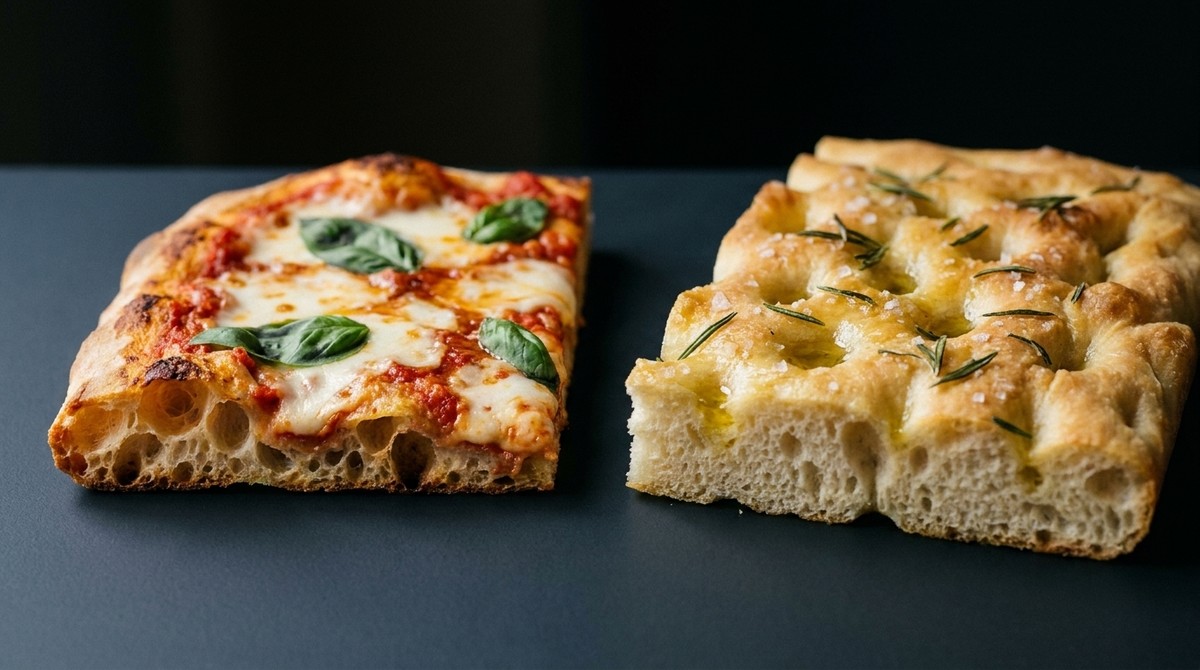
The pizza in teglia versus focaccia question seems simple until the first bite. Both start as dough baked in a pan, both can carry olive oil and both look irresistible on a counter. One goes after the explosive contrast between a croccante base, an airy crumb and toppings, though, while the other celebrates a soft, fragrant, generously oiled dough. Similar to the eye. Radically different in intent.
If you want to move past the usual round pizza, knowing that difference changes your choice completely. You don't have to decide which one is “better” in the abstract. What matters is knowing what experience you want at the table: a crisp Roman slice that makes you want to try several flavors, or a warm-hearted Italian bread that's ideal on its own, on the side or filled.
Pizza in teglia versus focaccia: the difference starts with the dough
Pizza in teglia, also called pizza al taglio when it's sold by the cut, is a deeply Roman specialty. It bakes in a teglia, a rectangular pan, and its identity lives in its texture. Good Roman pizza in teglia has a firm, croccante base, light edges and a crumb full of air pockets. You hear it when you break it. You bite into it and it doesn't weigh you down.
That lightness doesn't happen by accident. It depends on a precisely handled dough, high hydration, long resting times and a bake that builds a golden crust without drying out the inside. A long fermentation, like a 72-hour one, develops flavor and helps create that open crumb that makes a generous slice feel surprisingly light.
Focaccia, on the other hand, belongs to the bread family. It can be tall or low depending on the region and the recipe, but its crumb is usually more even, soft and stretchy. Before baking, the dough gets pressed with the fingers to create the classic dimples where olive oil, salt and sometimes herbs like rosemary settle in. Its bite is more cushioned. Less extreme crunch, more perfume and tenderness.
The key is purpose. Pizza in teglia is built to hold toppings and highlight the contrast in textures. Focaccia is designed to shine through the dough itself, even with simple toppings. That's why an excellent focaccia with oil, salt and rosemary needs nothing else to feel complete.
The pan doesn't make them the same
Baking both in a rectangular format doesn't make them the same recipe with different names. The teglia is the stage; the recipe is something else. In Italy, doughs change from city to city, from baker to baker and even from season to season.
A pizza in teglia can carry tomato sauce, mozzarella, roasted vegetables, Italian cured meats or more creative combinations. It's cut with scissors or a knife into square or rectangular slices, and it usually invites you to order several flavors to share. It's dynamic, visual and made for discovering one cut after another.
Traditional focaccia tends to be more restrained. It can have onion, olives, cherry tomatoes or cheese, but the bread stays the star. You can also split it open and fill it, a delicious option that turns it into lunch, an afternoon snack or a casual dinner. That's where another Italian gem comes in: Florentine schiacciata, usually thinner and crisper, made to wrap around bold fillings.
Texture: Roman croccante or oily softness
If texture is what matters most to you, the choice gets clear fast. Roman pizza in teglia offers contrast. The underside has to carry the weight of the toppings without bending or going soggy. Above it, the crumb keeps its air and stretch. The result is a slice that crunches first and then turns light, almost ethereal.
Focaccia wins you over another way. Its surface can be golden and slightly crisp, but the center usually feels moister from the olive oil. It's a comforting texture, the texture of well-made bread, with a saltiness that wakes up your appetite. A good focaccia isn't trying to make a loud sound when you break it. It wants to melt away softly.
That contrast also shapes how you enjoy them. Pizza in teglia works very well with intense, moist toppings, as long as they're balanced: tomato, melting cheeses, mushrooms, potato, mortadella or seasonal vegetables. Focaccia does best with clean flavors that respect the perfume of its dough and oil. A quality filling can lift it, but it shouldn't erase its personality.
Origin matters, but it doesn't lock in the recipe
Pizza in teglia has a direct link to Rome and its culture of cutting to order. It's urban, generous food made for the display case: you see it, choose it and share it. Its charm is that every slice can be different. A white cut with potato and rosemary. A red one with tomato and cheese. Another with seasonal ingredients. The variety is part of the ritual.
Focaccia is strongly tied to Liguria, Genoa in particular, though you'll find versions all over Italy. Each area has its own codes. Some are tall and very soft; others are thin, crisp and almost layered. In some places people even eat it with caffè latte, a pairing that may surprise you outside Italy but shows something essential: focaccia is everyday bread and, at the same time, a specialty with an identity.
That's why it's best to avoid absolute rules. Some focaccias are very crisp and some pizzas in teglia have a particularly soft crumb. There are also modern versions that cross technical lines. The real difference lies in the intent behind the dough, the fermentation method, the final structure and the role the ingredients play.
Which one to order, depending on the moment?
Choose pizza in teglia when you want a more expressive meal, with a range of flavors and a texture that puts the oven center stage. It's ideal for sharing with friends, trying different combinations or turning a casual outing into a short tour of Roman pizza. Its square format breaks the routine and looks as good on the table as it does in a photo.
Choose focaccia when you're in the mood for something warmer, more direct and closer to the bakery. It's perfect if you love olive oil, a soft dough and the pleasure of a good filling. It's also a great option to take out, because it travels well and keeps its charm even away from the oven, especially when it's made with fresh ingredients and balance.
And if you want the best of both worlds? Order a Roman pizza in teglia to share and a filled focaccia to add another texture to the table. They don't have to compete. They're two Italian ways of turning flour, water, time and fire into something memorable.
At Bianka® Pizza Romana, the invitation is to taste that difference without too much theory: listen for the croccante, look at the crumb, try the fillings and let the next slice decide for you. Che buono.