Aug 1, 2026
Pan pizza: Rome serves it by the square
Pizza in teglia is not eaten in a hurry, nor is it to be confused with just any square pizza. Its first sign is in the sound: a base that crackles when broken, air in the crumb, and a golden surface that supports real ingredients. It is Rome served in generous portions, with bakery technique, character, and that croccante touch that stays in your memory.
For those who think they have already tried every possible Italian pizza, this is a revelation. It does not seek to look like the round Neapolitan pizza or compete through imitation. It plays a different game: that of the dough, the square cut, and the freedom to combine flavors on a light, crispy, and deeply addictive base.
What makes pizza in teglia different?
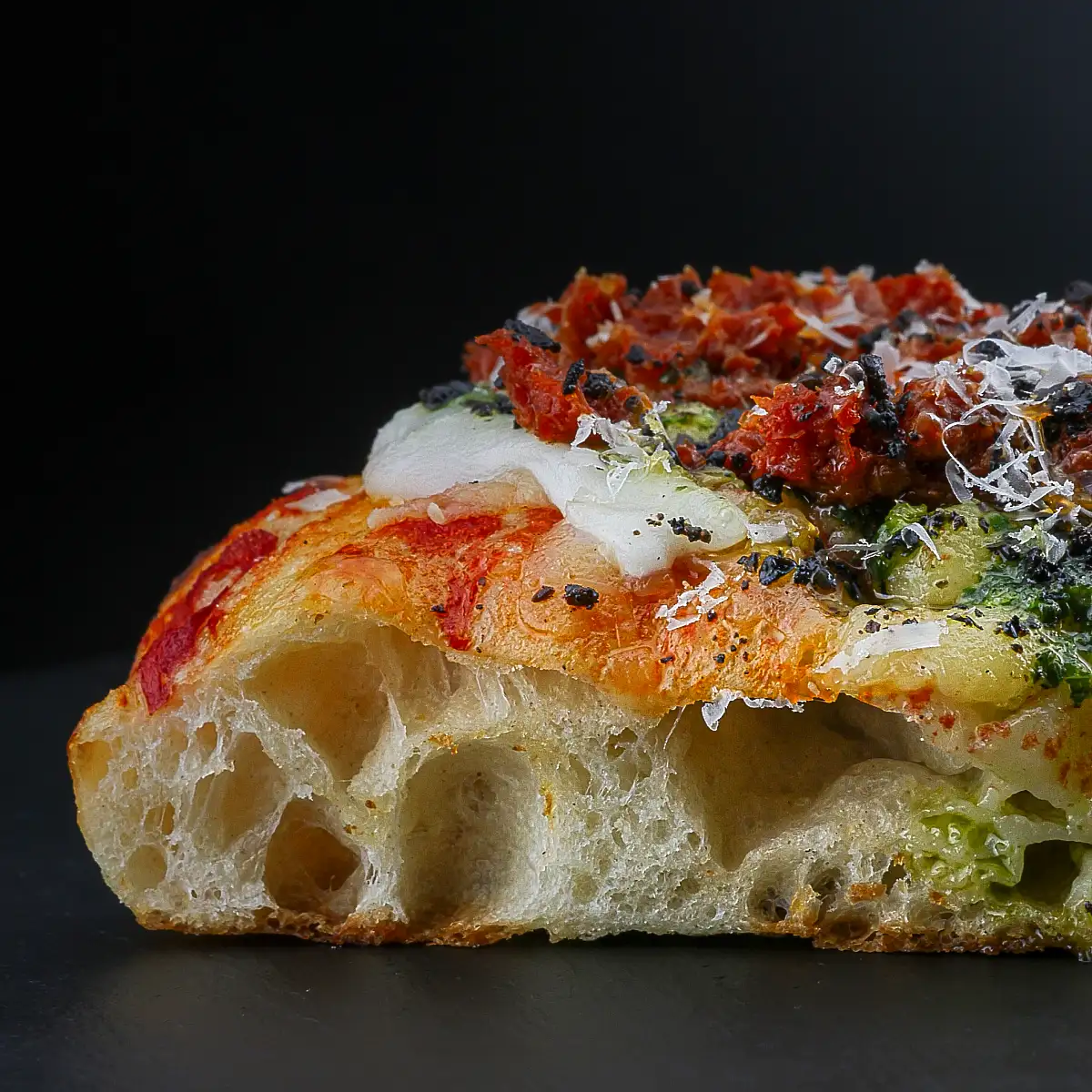
“In teglia” literally means “in a pan”. But reducing it to its container would be to miss the essential. This Roman pizza is born from a baking tradition where time is an ingredient. The dough is stretched out in a rectangular teglia, ferments patiently, and is baked until achieving a contrast that is hard to forget: a firm and croccante bottom, golden edges, and an interior full of bubbles.
Its format also changes the experience. Instead of a round pizza designed to be divided into triangles, pizza in teglia is cut into squares or rectangles. This allows you to try more than one combination at the same table, share without protocol, and turn each portion into a small decision: start with pomodoro and mozzarella, go for a more intense option, or save the most loaded bite for last?
It is not a heavy dough nor a base that surrenders under the toppings. When well made, it maintains its structure, is light, and lets each ingredient express itself. That is why the result feels closer to a great artisanal bread topped with Italian flavors than a generic pizza made to be served quickly.
The secret is in the time, not in excess
Slow fermentation is one of the main reasons why a well-executed Roman pizza tastes different. At Bianka® Pizza Romana, the dough ferments for 72 hours. This is not a decorative detail for the menu: it is the quiet work that develops flavor, improves texture, and creates that open crumb that begs for another bite.
With time, the dough gains depth. More complex notes appear, a less dense feeling when eating, and a crust that does not need to hide behind excess cheese. Fermentation does not make any pizza magical on its own, of course. Hydration, flour quality, oven temperature, dough handling, and the exact moment to remove the pan also matter. But without patience, that Roman personality that makes pizza in teglia stand out does not exist.
Here is a key point: croccante does not mean hard. A good base should break with a clean crack, yet retain a soft and airy crumb. If it is dry, the experience loses its charm. If it is too wet, it becomes difficult to hold and the flavors fade. The balance is precise, and that is why this pizza is so much about the craft.
A pizza that lets the ingredients shine
The dough is the protagonist, but it does not seek to overshadow what is on top of it. A well-seasoned tomato sauce needs balanced acidity and sweetness. The mozzarella must melt without flooding the base. Vegetables, cured meats, cheeses, and creams need to go into the oven at the right time to preserve flavor, color, and texture.
That care opens up space for classic and more daring combinations. One slice can be simple, with tomato, mozzarella, and basil. Another can carry more intense ingredients, salty or creamy contrasts, and a final touch that completely changes the profile. Pizza in teglia allows for this variety because each square has its own presence.
That is also why it works so well for going out with friends, a date, or a family meal. There is no need for the whole table to want the same thing. Ordering various flavors transforms the meal into a shared tasting, more conversational and much less predictable than ordering an identical pizza for everyone.
Roman pizza in teglia versus round pizza
There is no absolute winner. There are different moments and cravings. Neapolitan pizza, with its high rim, soft center, and centuries-old tradition, has its own ritual. Pizza in teglia offers another texture, another way of sharing, and a much more direct relationship with Roman bakery.
The most obvious difference is in the base. The round one usually arrives whole at the table and is eaten fresh from the oven, with a more flexible center. The in teglia is baked in a pan, cut into portions, and seeks a firmer and crispier base. This structure makes it excellent for varied toppings and for maintaining a defined bite from start to finish.
It also changes the rhythm. A round pizza is usually an individual choice. The pizza al taglio or in teglia invites you to try, swap, and come back for a second flavor. For a dinner where the idea is to discover something new, the second option has a clear advantage: it turns the table into an experience, not just an order.
How to recognize a well-made pizza in teglia
The look gives the first clues. Look for a golden base, with visible bubbles in the crumb and edges that look light, not compact. When lifting the slice, it should hold up without bending completely, yet not feel rigid like a cracker. The bottom should have color and texture, not pale spots or an oily appearance.
Then comes the aroma. Before tasting it, a good Roman pizza smells of baked dough, fresh ingredients, and gentle toasting. If everything smells the same, the toppings are probably doing too much work and the dough too little.
In the mouth, contrast rules. First, the crunch. Then a light crumb, with air and elasticity. After that, the ingredients in proportion. There should not be a layer of cheese that blots out the tomato, nor a base so thick that it turns each slice into purposeless bread. The best pizza in teglia finds balance without losing attitude.
The right way to eat it: with curiosity
There is no complicated etiquette. It can be eaten with your hands, especially when the base has the right structure. It can also be shared in the center, ordering various flavors and mapping out a route of bites: starting with the most delicate profiles and ending with the most powerful ones.
If you are going for the first time, it is worth choosing at least one classic option. It is the most honest way to get to know the dough. After that, yes, look for contrasts: a creamy slice, another with acidity, one with a more intense ingredient. Variety is not an extra in this format, it is part of its charm.
And if what you want is an even more bakery-oriented experience, the filled schiacciata also deserves attention. It shares that Italian spirit of dough crafted with precision, but proposes another way to play with fillings, layers, and textures. Two different formats, the same obsession: that the bread has as much personality as what is inside it.
The next time a craving calls for pizza, do not choose out of habit. Look for a slice with a croccante base, slow fermentation, and flavors that feel alive. In San Pablo de Heredia, ordering Roman pizza by the square can be the most delicious plan of the week. Che buono.