Aug 27, 2026
Top artisanal Italian dishes you must try
Not every artisanal Italian dish is recognized by having an Italian name. It is recognized at the very first bite: a crust that crunches without being dry, a filling that has a purpose, and a recipe that does not try to hide behind an excess of cheese or characterless ingredients. The top artisanal Italian dishes celebrate something much more interesting than fast food: technique, patience, product, and territory.
For those looking for a different outing in Costa Rica, Italian cuisine has a vast universe beyond the conventional round pizza. Rome, Florence, Naples, Liguria, and Emilia-Romagna all have their own traditions, their own doughs, and very different ways of understanding the oven, the bread, and the fillings. Therein lies the charm: eating real Italian is discovering that a texture can tell a story.
What makes an Italian dish artisanal
The word artisanal is used a lot, but in cooking it should mean something concrete. It speaks of processes that take time, of dough worked with judgment, of well-controlled fermentations, and of ingredients chosen for how they taste, not just how they look in a photo.
In Italian dough dishes, fermentation is a key indicator. A slow-fermentation dough develops flavor, improves its structure, and can feel lighter when eaten. It is not magic or a universal promise: it depends on the flour, hydration, temperature, and handling. But when the process is well executed, it shows. The crust has character, the interior is airy, and every bite invites the next.
Proportion also matters. The best filling does not overwhelm the dough. The tomato does not cover the cheese, the cheese does not drown the vegetables, and the cured meats do not turn everything into salt. Craftsmanship lies in knowing when to stop.
Top artisanal Italian dishes to order without hesitation
Pizza romana in teglia: crispy, light, and square
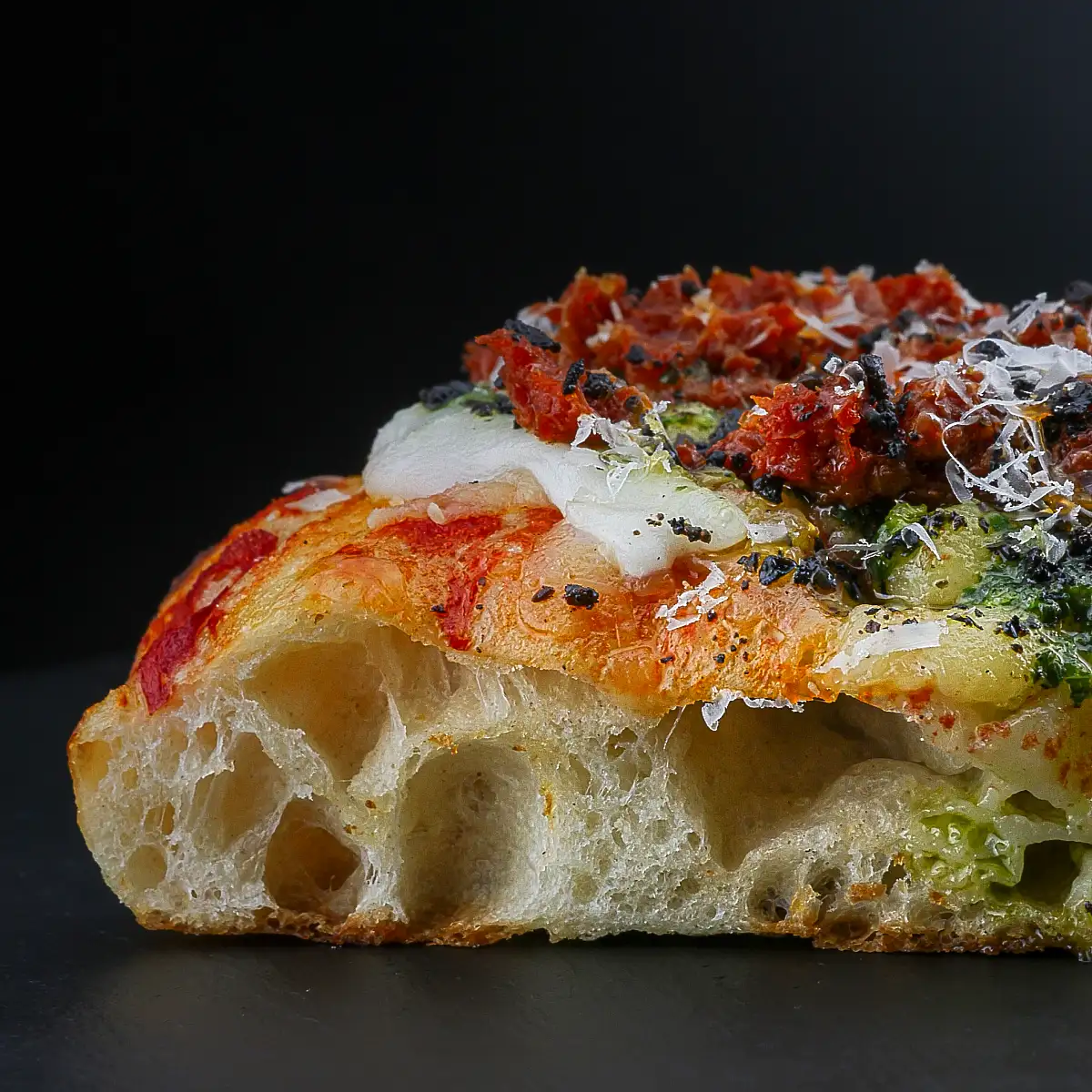
Pizza romana in teglia is one of the most exciting expressions of Roman baking. It is baked in a pan, typically served in square or rectangular slices, and has a crispy base that supports generous ingredients without losing its structure.
Its big difference is in the bite. The bottom should crackle slightly when broken, while the crumb retains air and softness. It is a pizza designed for sharing, trying various flavors, and debating which slice won the night. The classic with tomato and mozzarella always works, but a good in teglia also opens up space for combinations with roasted vegetables, mushrooms, mortadella, stracciatella, or potatoes.
Not all square pizzas are pizza romana. If the dough feels heavy, greasy, or rigid, technique is lacking. A well-made in teglia has contrast: crispy on the bottom, light on the inside, and flavorful from end to end.
Stuffed focaccia: the power of a good dough
Focaccia can seem simple until you try one made with intention. It is bread, yes, but not just any bread. It has an elastic crumb, the scent of olive oil, a golden surface, and an extraordinary ability to embrace fillings without falling apart.
In a stuffed format, it becomes a complete and very Italian meal. Prosciutto, creamy cheeses, grilled vegetables, pesto, or chicken can work wonders, provided there is balance. The challenge lies in preventing the filling from making the dough soggy or the bread from becoming a simple, flavorless vehicle.
It is an ideal choice for lunches, afternoons with friends, or when you want something casual with much more personality than a generic sandwich. An artisanal focaccia begs to be eaten freshly baked, when the exterior still retains that irresistible golden color.
Schiacciata: the crispy gem of Florence
Schiacciata comes from the Tuscan tradition and is one of those discoveries that changes the way you look at a sandwich. Its name refers to a flattened dough, but its texture has depth: a firm, crispy exterior, an airy interior, olive oil, and a flavor that supports highly intense fillings.
In Florence, it is enjoyed with mortadella, pecorino, truffle cream, cured ham, or vegetables. The secret is not to overfill it. A memorable schiacciata needs space for the dough to express itself and for each ingredient to maintain its identity.
It is also one of the most photogenic dishes of artisanal Italian cuisine, but it should not stop at the photo. When well made, it has that sound when cut and that contrast of textures that makes a quick bite feel like a short trip.
Supplì: the Roman bite that deserves attention
The supplì is a Roman classic that often gets overshadowed by pizza. Big mistake. This rice croquette, traditionally stuffed with ragù and mozzarella, is breaded and fried until it achieves a golden crust and a creamy center.
The decisive detail is the rice. It must be tasty on its own, not a neutral mass around the cheese. When opened, the mozzarella should stretch, but the show is not enough: there must be balance between the sofrito, the tomato, the meat, and the clean frying.
It is perfect as an appetizer to share while the pizza or focaccia arrives. It is also a good test to measure an Italian kitchen: an excellent supplì reveals attention to stocks, cooking times, and textures.
Eggplant Parmigiana: layers with history
Eggplant parmigiana proves that artisanal Italian cuisine does not need dough to be hearty. Eggplants, tomato sauce, cheese, and baking seem like a simple formula, but reaching the right point requires patience.
The eggplants must be tender without falling apart; the sauce, intense but not watery; the cheese, present without making the dish heavy. Depending on the region and the household, the recipe changes. Some versions fry the eggplant, others bake it. Neither is automatically superior: it depends on the final result and how well the ingredients are respected.
It is a warm, generous, and deeply comforting dish. If you are looking for a vegetarian alternative that does not feel like a compromise, a well-prepared parmigiana is a serious bet.
How to choose an Italian experience that is worth the outing
Before ordering, look at the house specialty. A place that speaks clearly of pizza romana, focaccia, or schiacciata usually understands that each format requires a different technique. Do not expect a single dough to do everything well. Identity matters.
It is also wise to ask about the processes. A kitchen proud of its product can explain its fermentation, its baking style, or the origin of a recipe without turning it into a complicated speech. That confidence usually comes from doing things every day and refining them with obsession.
Lastly, order with curiosity. If you always choose pepperoni, try it, but add a portion of a less predictable flavor. A combination of mortadella and pistachio, roasted vegetables and cheese, or tomato with seasonal ingredients can be the dish that ends up defining the visit.
Technique completely changes the craving
There are meals that solve hunger and others that stay in the conversation. Artisanal Italian dishes belong to the second category when they respect their origin and are prepared without shortcuts. In San Pablo de Heredia, Bianka® Pizza Romana puts that philosophy on the table with pizza in teglia, stuffed focaccia, and schiacciata made to share, compare, and order again.
The next time an Italian dining plan comes together, look for the right sign: a dough given time, an oven doing its job, and a dish that has something of its own to say. Che buono.