May 5, 2026
Why ferment dough for 72 hours
There is a difference you notice from the very first bite. It is not just that the base is crunchy or that the inside feels light. It is that sensation of a pizza that is well made, with deep flavor, elegant structure, and a much gentler digestion. If you have ever wondered why fermenting dough for 72 hours makes such a difference compared with an ordinary pizza, the answer lies in technique, time, and respect for the Italian baking craft.
In Roman pizza, that time is neither a luxury nor a foodie trend. It is part of the result. Long fermentation transforms the dough into something much more refined: it develops flavor, improves texture, and allows for an experience that truly feels artisanal. So good, yes, but also technically superior.
Why fermenting dough for 72 hours changes pizza
A dough does not improve just by mixing flour, water, yeast, and salt. What elevates it is what happens afterward. Over 72 hours, the yeasts and enzymes work slowly on the starches and proteins. That process changes the dough’s internal structure, creates more complex aromas, and gives it a personality that simply does not appear in a quick fermentation.
When a pizza ferments for too little time, it tends to rely more on the toppings to impress. The base stays in the background. With a long fermentation, the dough speaks too. It has its own flavor, character, and a texture that supports the ingredients without becoming heavy. In a Roman pizza in teglia, that is key: the base has to be the star.
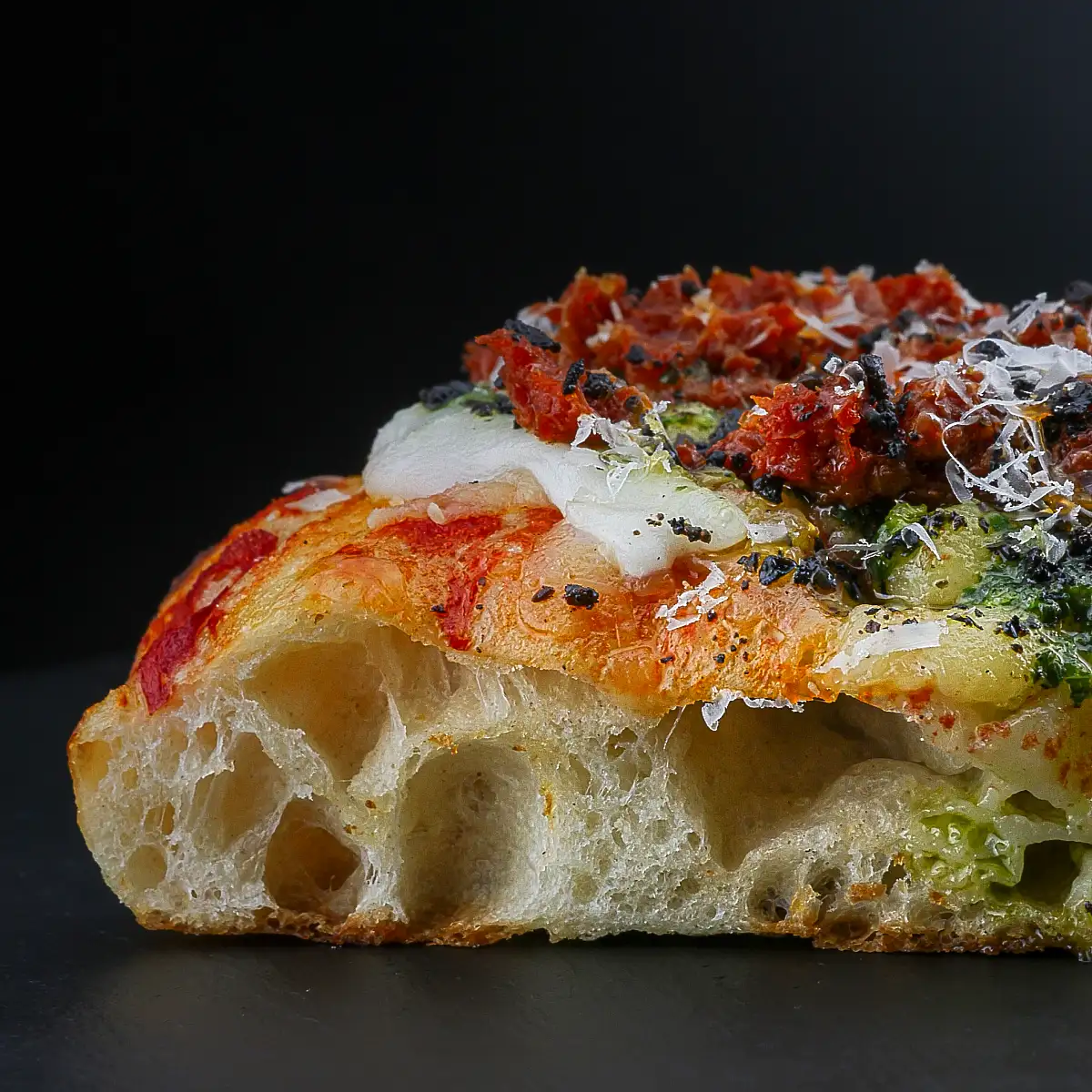
The change is also visible in the oven. A well-fermented dough expands better, develops more defined air pockets, and achieves that highly desired contrast between a crisp exterior and an airy interior. It is not just about looking good in a photo. It is about structure, bite, and sensory memory.
More flavor, less hurry
Time gives the dough depth. That is one of the main reasons to understand why fermenting dough for 72 hours is worth it. In short processes, the flavor is often flat. Correct, yes. Memorable, not always.
By contrast, a long fermentation creates more complex notes, slightly lactic, subtly toasted, with a fragrance that is more reminiscent of good artisan bread than of a generic pizzeria base. That difference is felt even before tasting it. When the tray reaches the table and the aroma rises, there is already a promise of quality.
For a premium concept, this is no minor detail. The dough stops being a vehicle and becomes part of the product’s luxury. That is where a square pizza, a stuffed focaccia, or a well-executed schiacciata stand out from the crowd.
The flavor does not get hidden by ingredients
A great dough does not need to hide under excess cheese, heavy sauces, or toppings without purpose. On the contrary, a base fermented for 72 hours allows each ingredient to have its place. The sauce tastes fresher, the cured meats come through better, and the crunch does not disappear after the second bite.
That also changes the way pizza is eaten. It becomes a cleaner, more balanced, and much more interesting experience.
The texture that makes the difference
In Roman pizza, texture rules. And here long fermentation plays in the big leagues. A 72-hour dough can develop a crunchy crust without feeling dry, and a light crumb without becoming fragile. That balance is hard to achieve when everything is rushed.
There are pizzas that crackle, yes, but feel hard. Others are airy, but weak. Prolonged fermentation helps avoid those extremes. It adds elasticity, improves the dough’s effective hydration, and promotes a more even bake.
The ideal result is that bite with contrast: firm base, delicate edge, airy interior, and a lightness that makes you want to keep eating. That does not happen by accident. It happens because there was patience.
Truly crunchy
The word crunchy gets used a lot, but not always fairly. In a well-fermented dough, crunch is not just noise. It is fine texture, dry where it should be, resilient against toppings, and pleasant to bite into. It does not scrape, it does not tire you out, it does not break apart uncontrollably.
That kind of crunch is a mark of quality. And in formats like pizza in teglia, it is one of the reasons the experience feels so different from traditional round pizza.
Is a 72-hour fermented dough easier to digest?
In many cases, yes. And it is worth saying honestly: not because pizza magically becomes a light food, but because the process helps break down part of the flour compounds before baking.
During long fermentation, enzymes begin working on starches and proteins, which can make the dough feel gentler for many people compared with a short-fermented dough. In addition, a well-made formulation usually requires less forced yeast and fewer shortcuts.
That does not mean everyone will feel it the same way. It depends on the flour, hydration, baking, and individual sensitivity. But it does explain why many people try a long-fermented pizza and say something very simple: this sits better.
And when a meal feels pleasant before, during, and after, quality stops being a talking point. It becomes obvious.
What 72 hours demand in the kitchen
It should also be said clearly: fermenting dough for 72 hours is not the easy way out. It requires planning, temperature control, precise timing, and real consistency in production. It is not enough to leave the dough stored away and wait for miracles.
A well-executed long fermentation requires judgment. If the dough overproofs, it loses strength. If it falls short, it does not develop its full potential. If the flour does not cooperate, the result becomes unbalanced. It is a technique that rewards discipline and punishes improvisation.
That is why, when a place commits to this process as part of its identity, it is making a serious decision about the standard it wants to uphold. It is not selling just another pizza. It is defending a method.
Not everything depends on time
The 72 hours help a lot, but they do not work magic on their own. Flour quality, hydration, oven type, dough shaping, and the exact reading of doneness also matter. Poor execution can ruin even a long fermentation.
In other words: time enhances technique; it does not replace it.
Why fermenting dough for 72 hours fits Roman pizza
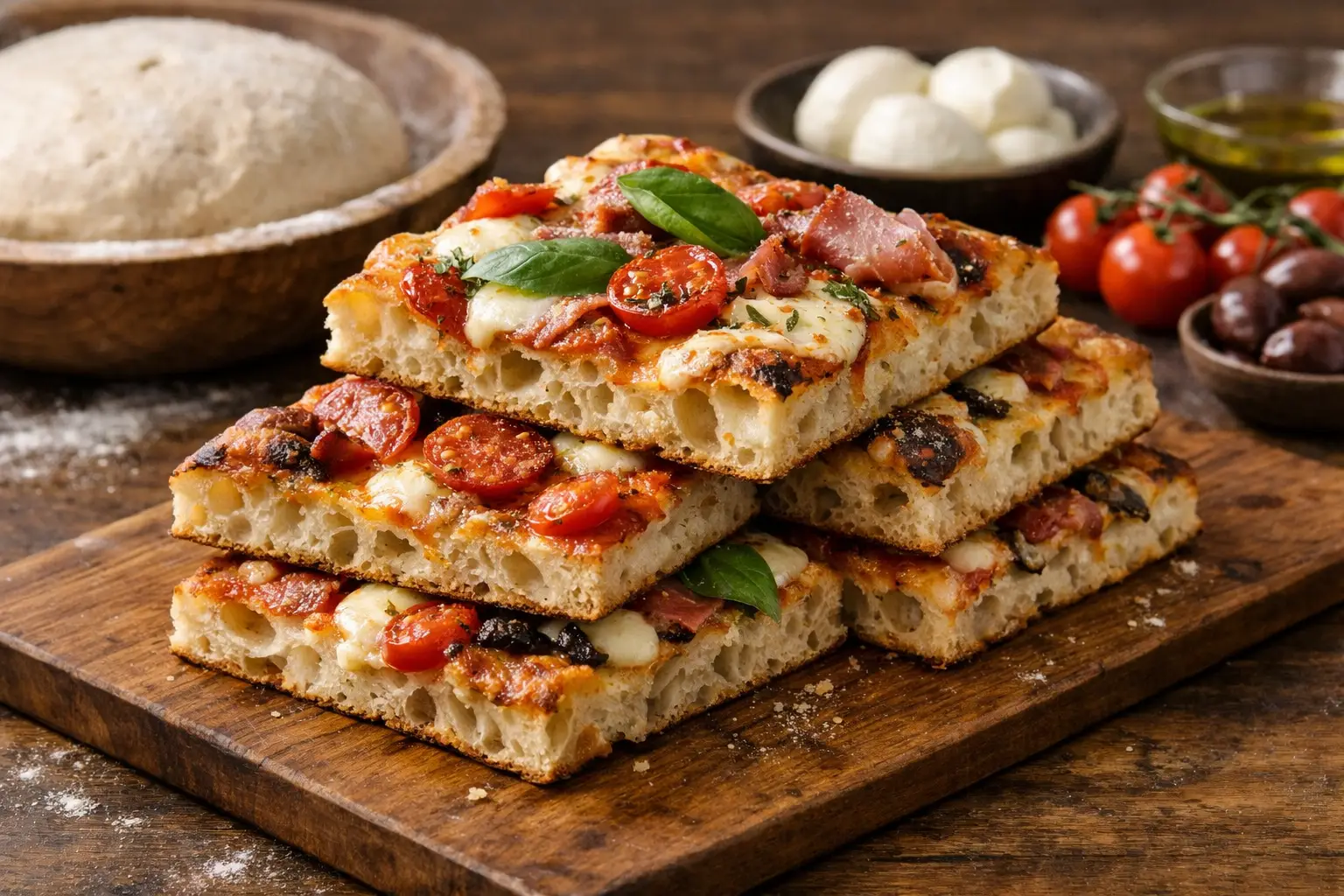
Roman pizza follows a different logic. It seeks lightness, structure, crunch, and a bakery-like look that you notice at a glance. It is not a soft base meant to fold without resistance. It is a dough with identity, with air, with craft.
That is why long fermentation fits this style so well. It gives it the maturity needed to handle high hydration, form a more open crumb, and achieve that texture so celebrated in Rome: crisp on the bottom, light inside, irresistible as a whole.
In a specialized concept, this technique is not communicated just to sound artisanal. It is communicated because it defines the product. It is part of the reason why a brand like Bianka® Pizza Romana feels different in the Costa Rican market: it does not replicate the familiar, it presents a specific tradition, executed with conviction and a lot of flavor.
It is worth the wait
We live surrounded by fast food, quick decisions, and immediate results. Precisely for that reason, a dough fermented for 72 hours feels special. There is something deeply appealing about eating a product that was not rushed, that respected its process, and that reaches the table at its best.
You can taste that in the aroma, in the bite, in the lightness, and in the memory it leaves behind. The next time you see a long-fermented pizza, do not take it as just another technical detail. Read it as a promise of flavor, texture, and craft.
Because when the dough is given time, you get a pizza that is truly worth craving.